
NEXT CHAPTER AUTHOR
B.E. Smith
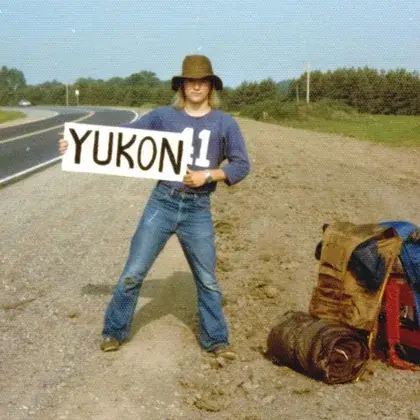
B.E. Smith is a veteran teenage hitchhiker of the early 70’s and more recently, a thirty-year veteran of the Canadian Armed Forces. He currently lives in Kingston Ontario, writing full time, still married to his resourceful and multi-talented high school sweetheart after thirty-four eventful years.
IN THE AUTHOR’S WORDS
Author interview
Interview submitted .
What inspired you to start writing?
The summer I was seven years old, I was sent to stay with an aunt, a retired school teacher, who I don’t think ever threw out a book in her life. Stuck in a strange town without friends or cousins my age and no television, I poked around her old Edwardian house. I found an attic filled with boxes of books, the lifetime’s collection of an avid reader. It wasn’t quite a wardrobe leading to Narnia, but it was enough to keep me busy through the long days and nights and set me on a lifetime of reading and wanting to tell stories.
At that age, I was drawn to the old history textbooks and novels with full-colour plate illustrations. I started writing at once and never stopped, the subject matter of my tales mirroring my changing reading habits. Ancient history textbooks were a gateway drug to sword and sorcery fantasy and science fiction. Through the sixties and seventies, I devoured all the sci-fi, fantasy, and pulp war stories I could find in the library and used bookstores, ranging from Robert E. Howard to H.G. Wells and J.R.R Tolkien. The excellent writing of Cecelia Holland, Mary Stewart and James Clavell fueled an interest in historical fiction, followed by an obsession with the hard-boiled crime fiction of Ross Macdonald, John D MacDonald, Ed McBain, and Elmore Leonard.
Who are some of your favorite authors and books?
Certain books and writers strongly influenced me when I first encountered them. Many do not stand the test of time. That said, Sam and the Firefly by P.D. Eastman and Snow Treasure by Marie McSwigan remain wonderfully evocative works.
Historical fiction: Everything by Cecelia Holland, Mary Stewart’s Arthurian series, James Clavell, Tia-Pan and Shogun. Evelyn Waugh, Sword of Honour. Norman Mailer’s The Naked and the Dead.
For Fantasy: J.R.R Tolkien’s Hobbit and Lord of the Rings, Robert E. Howard’s Conan series.
Science Fiction: H.G. Wells's War of the Worlds, Joe Haldeman’s The Forever War, John Brunner’s Stand on Zanzibar, Frank Herbert’s Dune, Robert Siverberg’s Nightwings.
I loved the opening chapters of Ayn Rand’s Atlas Shrugged, but I quickly got bogged down in the heavy style and political message and could barely finish it. After several readings, I still find A Clockwork Orange a masterpiece (the international version, not the American edition, which cut out the vital last chapter). Although not stickily science fiction, in hindsight, it is incredible how accurately Burgess, writing in the late sixties, captured the UK of the late 80’s.
Crime fiction: The Red Harvest by Dashiell Hammet opened a new world for me. I admire the lean style of Ross MacDonald in books like Blue City, The Drowning Pool, and The Far Side of a Dollar, Joseph Wambaugh's The Blue Knight, The Choirboys, and his nonfiction, The Onion Field and especially Lines and Shadows. I admire the Travis McGee series by John D MacDonald, Ed McBain’s 87th Precinct Series, and Elmore Leonard, especially his earlier work.
While working on the final draft of Shallow Rock, a few books were on my mind, primarily Robert (not Oliver) Stone’s Dog Soldiers, The Hustler by Walter Tevis, and Deliverance by James Dickey. In Nonfiction, Helter Skelter is outdated but gives an excellent feel for the period. The more recent, Chaos: Charles Manson, the CIA and the Secret History of the Sixties, provides a better picture of what was happening behind the scenes and is a great read. In nonfiction, some of the best books on Vietnam are Street Without Joy by Bernard Fall, Chickenhawk by Robert Mason and John Lawrence’s The Cat from Hue.
What would you like to tell readers who have just discovered your books, but haven't read one yet?
I use a limited, tight, third-person style alternating between the two principal protagonists to present the reader with different perceptions of the same events, leaving them to judge the truth. Although they deal with sex and violence, my stories are not graphic or gory. The pace is fast, the story propelled by dialogue and action, with hints and clues often causally dropped. I work hard to create an arc that comes full circle and ties up everything.
Music is important. While writing, I create an extensive playlist for my novels, primarily from music of the period I’m writing about. Creedence Clearwater Revival and The Band are responsible for the tone and feel of Shallow Rock as much as any novel.
Who is the favorite character you created, and how did they come into being?
Shallow Rock is filled with quirky and sinister figures. I enjoyed writing them all. Kelly Mackinaw and Mitch Herkimer represent two different worldviews. Vaguely aware of their flaws, they try to make sense of what is happening around them and attempt to do the right thing in their own light with limited information.
What are your future plans as a writer?
Under the pen name Jack Harrowsmith, I am deep in Tales From the Borderlands, a light, fast-paced, genre-blending (horror, mystery, sci-fi, thriller) series set in the Northern Minnesota, Ontario border area in the fifties and early sixties. It is heavily influenced by pulp fiction and classic drive-in movies.
Wicked City, which deals with Canada’s largest and most baffling arson case, which occurred in Winnipeg in 1913, will be released soon.
Should it be popular, I have ideas for sequels and prequels to Shallow Rock in mind.