NEXT CHAPTER BLOG
Finding Her Voice in The Violin Maker’s Wife
In 18th-century Cremona, Katarina Rota’s musical talent leads toward a craft whose gatekeepers are unwilling to welcome her.
Share
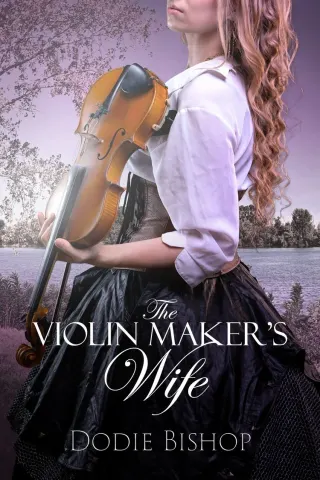
A violin workshop opens a possibility that Katarina Rota has not yet imagined. In Dodie Bishop’s The Violin Maker’s Wife, her encounter with Giuseppe Guarneri begins in Cremona in 1714, when she is thirteen. Music becomes both an education and a connection that will shape her adult life.
Giuseppe teaches her to play, and her ability grows beyond his. Yet being recognized as a talented pupil is different from being allowed to choose her own future. Family expectations and the limits placed on women complicate the path ahead.
A future arranged by others
Katarina’s family has arranged a marriage to Johannes Horak, a Viennese army captain. The prospect offers a different direction from the attachment she has developed to Giuseppe, who still sees the child he first met. Her relationships unfold alongside a more practical question: what kind of work can she make her own?
The novel follows these intersecting lives across two decades. Friendship, affection, and disappointment belong to that changing world, where a decision about marriage can also become a decision about opportunity.
Claiming a place at the workbench
Katarina’s ambition eventually brings her to violin making. Cremona’s male luthiers meet her talent with prejudice, making professional recognition a struggle as well as a creative goal. The workshop becomes a place where the right to practice a skill matters as much as the skill itself.
For readers drawn to historical fiction about women and artistic work, the novel connects private relationships with a public barrier to belonging. Inspired by real-life characters, it offers an imagined story of 18th-century Italy through a woman determined to find her place in its musical craft.
FROM THE NEXT CHAPTER CATALOG
Featured Book
The Violin Maker's Wife
In 1714 Cremona, young Katarina Rota finds herself caught between love and ambition as she navigates her path as a gifted violinist and maker.
Explore the book →