NEXT CHAPTER BLOG
Natchez’s Haunted History: Separating Stories and Records
Explore Natchez’s haunted reputation with a clear distinction between ghost stories, documented history, and the fictional setting of Tainted Harvest.
Share
A ghost story is not a historical record
What lies behind Natchez’s haunted reputation? A useful answer starts by separating a place’s documented past from stories told about spirits. A building’s age can be researched. A murder, a romance, or a reported apparition requires its own evidence; the existence of the building does not establish the rest of the tale.
That distinction matters especially when an account promises the real history behind a haunting. Without a traceable source, a named ghost can make an invented episode sound like a recovered life. Leaving such an anecdote out is more honest than filling a gap with an attractive explanation.
The history that records can establish
At Forks of the Road, the historical subject is the trafficking of enslaved people. The National Park Service records that the Natchez market operated from 1833 until Federal troops arrived on July 13, 1863. Its account also describes formerly enslaved soldiers demolishing the slave pens after emancipation.
This is a history of human beings and institutions, with consequences that do not depend on a supernatural claim. Presenting it primarily as a place to hear ghostly chains risks replacing the people involved with an atmospheric effect. A stronger approach asks what sources reveal about their experiences and about the system that held them in bondage.
Where Tainted Harvest uses fiction
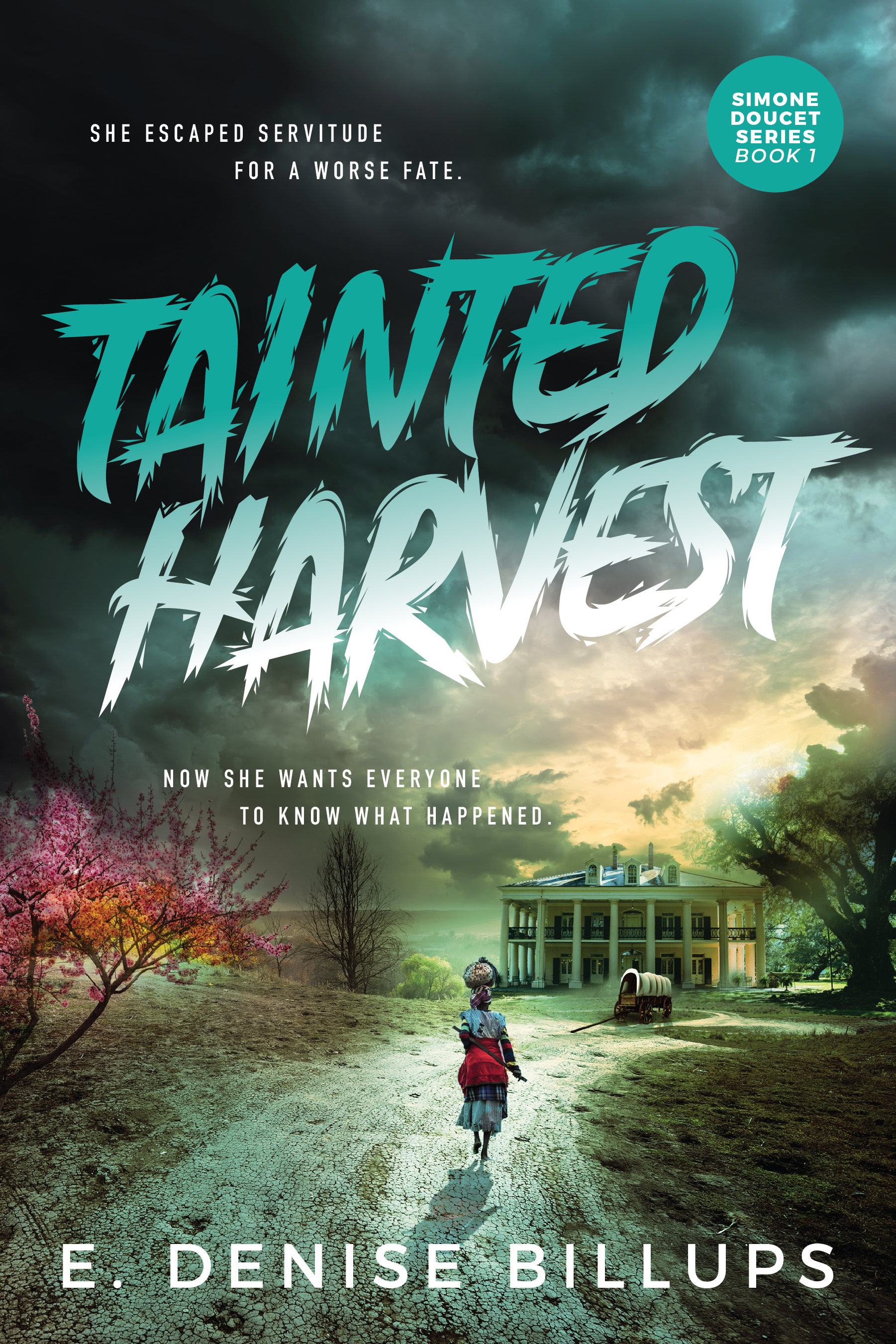
E. Denise Billups’s Tainted Harvest imagines a supernatural encounter in Natchez. Travel writer Simone Doucet arrives at a historical bed-and-breakfast and begins seeing Delphine, an enslaved girl whose story presses into Simone’s life. The premise connects a present-day visitor with an imagined experience of the past.
Simone, Delphine, and those spectral encounters belong to the novel. They should not be used as evidence for a real haunting or a particular historical person. Readers interested in this fictional treatment of memory and the past can find Tainted Harvest below.
Sources and further reading
FROM THE NEXT CHAPTER CATALOG