NEXT CHAPTER BLOG
Suspended Animation: What the Research Actually Shows
Explore suspended animation research, from rodent experiments to NASA habitat concepts, and see why fictional sleep technology remains a separate idea.
Share
What does suspended animation mean?
Could a person sleep through years of space travel or a disaster? The science fiction version of suspended animation makes that possibility look simple: enter a chamber, wait while the world changes, and wake again. Research uses narrower, measurable questions about metabolism, temperature, and recovery.
Torpor is an energy-conserving state involving reduced metabolic activity and body temperature. It is not equivalent to ordinary sleep, and a torpor-like result in a laboratory animal does not establish that a person can safely spend years in stasis. The distinction between a proposed application and a demonstrated result is central to reading this research.
What the animal experiments show
In 2005, Eric Blackstone, Mike Morrison, and Mark Roth published a Science paper reporting a reversible suspended animation-like state in mice exposed to hydrogen sulfide. The paper dates to 2005, rather than 2019. Its findings concern mice under experimental conditions; they do not demonstrate a human sleep-pod technology.
A separate 2023 Nature Metabolism study reported that targeted ultrasound could induce a torpor-like state in mice. With feedback control, the researchers maintained that state for more than 24 hours. They also reported a smaller temperature response in rats. These are distinct animal experiments, with different methods and results, rather than successive demonstrations of human suspended animation.
From a habitat concept to a fictional shelter
NASA has supported conceptual work on torpor-based habitats for a journey to Mars. An engineering study can examine potential benefits and design requirements without showing that its proposed human torpor system is ready to use. The cited studies do not establish years-long human stasis or suspended aging.
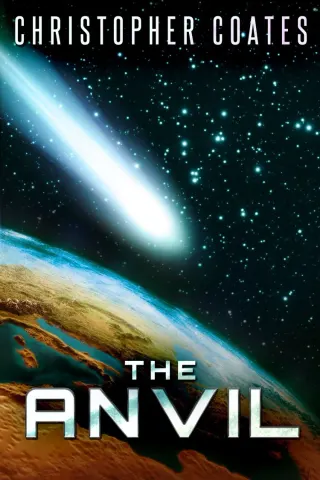
Christopher Coates’s The Anvil explores a fictional response to a comet-related catastrophe through underground shelters. It is a parallel story to The Ark; its publisher description does not establish sleep-state technology as its central premise. Readers interested in that survival scenario can explore The Anvil below.
Sources and further reading
FROM THE NEXT CHAPTER CATALOG
Featured Book
The Anvil
A comet threatens Earth with deadly radiation, forcing survivors into shelters built for twenty years underground.
Explore the book →