



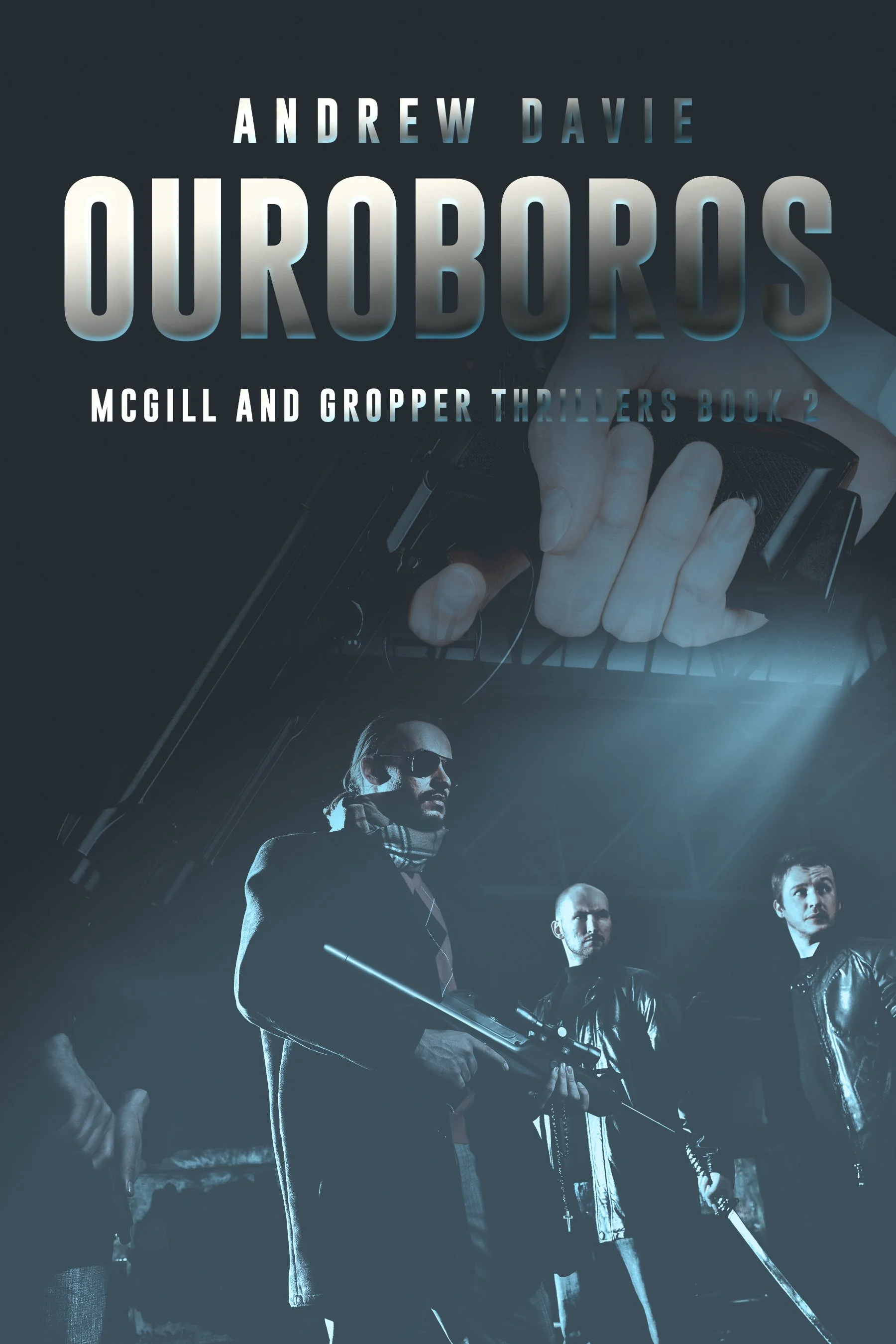
Ouroboros (McGill And Gropper Thrillers Book 2)
Old Grudges Die Hard in Charleston
In the heart of Charleston, South Carolina, two unlicensed private investigators run their operation out of a quiet diner. McGill, a once-sharp former cop who now rarely leaves his booth, prefers pancakes, bacon, and strong coffee over fieldwork. Gropper, his partner, is a tactical expert with a shadowy past and fists that do most of the talking.
Specializing in recovering stolen property, they take on the small jobs others overlook — keeping under the radar, bending rules as needed, and staying just ahead of trouble. But when a figure from McGill’s past resurfaces, this job becomes personal. And deadly.
Follow McGill and Gropper into the underbelly of the city — and find out if this time, the past finally catches up.
Excerpt from the book
Sounds erupted throughout the cell blocks like a chamber orchestra rehearsing for a concert. The squeal of mattress springs, grunts, coughs, and other exhalations echoed off concrete walls. They accompanied the moans of all forms of sexual activity and the consumption of drugs that had been clandestinely transported from the outside world. Inmates licked magazine inserts that had been dipped in acid and snorted from balloons of heroin smuggled in body cavities. People sipped fermented concoctions made from rotted fruit and sugar. Some inmates snored; others sang.
The prison library, however, was quiet. It had started as a single room with a few cardboard boxes full of used books. No one remembered where they came from or who brought them. One day, there were three large cardboard boxes full of books, which ranged from dime-store pulp fiction to academic textbooks on American history. Apparently, someone had delivered them one year in the early 1950s, and the prison had misplaced the inventory slip.
The following decade, during one of the more turbulent eras on college campuses, prison reform became a hot-button issue. Students independently raised funds and helped to quadruple the number of books in the library. Some of the more determined students initiated a tutoring program that saw a few inmates receive their high school equivalency.
In the mid-1990s, the governor mandated another set of prison reforms. Though most of them had to do with hiring more guards, one such improvement was to overhaul the library. The new library consisted of two adjoining rooms—one solely dedicated to the housing of books and magazines. The other room had a computer and microfiche. The prison board also created the position of a librarian to oversee day-to-day operations. While this person would be an outside contractor, the rest of the staff would be hired from a pool of applicants from within the prison population.
The librarian had been working there for the last decade. He had probably been one of the same students who had embraced reform back in the sixties and had never given up the good fight. These days, when he was not helping convicts revise letters for their appeals, he was helping them learn how to read or reestablish communication with family members. He had a small office, but he was rarely there. Usually, he could be found pacing back and forth among the shelves, clad in Birkenstocks and a short-sleeve button-down shirt. He’d gotten rid of his ponytail a few years earlier.
Many of the jailhouse lawyers used the library to meet with clients. These sessions occurred so often that the librarian had created a separate section for these informal meetings. Twice a day, one of the convicts brought a cart down among the tiers to pass out and collect books; other duties consisted of cataloging and shelving books. These books, of course, had been screened before they made it to the shelves. The inmate who currently worked the library shift was named Mark Franklin, though he never performed any of the job requirements.
Sed purus sem, scelerisque ac rhoncus eget, porttitor nec odio. Lorem ipsum dolor sit amet.