



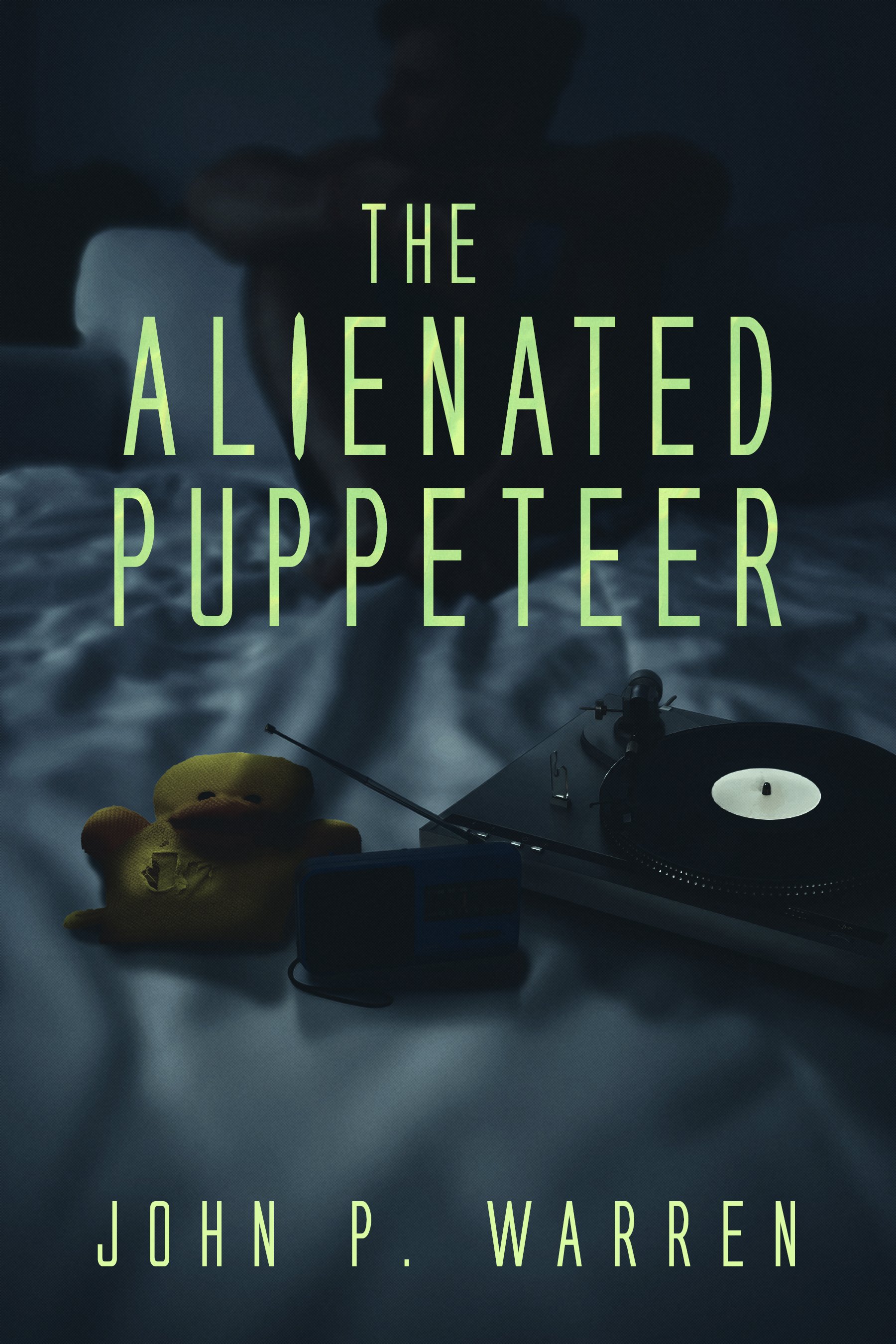
The Alienated Puppeteer
An Outsider’s Voice in a World That Won’t Listen
In early-1990s rural Ireland, Jeremy Bolton is a boy out of step with the world around him. After losing his mother at a young age, he is sent to live with his aunt and withdrawn step-cousin, Freddie. Misunderstood, mildly autistic, and haunted by paranoia, Jeremy clings to his glove puppet, Peter Duck, as his only source of comfort in a hostile environment.
Through the blurred lines of trauma, grief, and misdiagnosed mental illness, Jeremy stumbles from schoolyard bullying to the echoing walls of a psychiatric hospital. Along the way, he navigates obsession, shame, hypersexuality, and the unresolved guilt of failing those he cared about—most notably Freddie, whose tragic fate weighs heavily on his conscience.
At the heart of The Alienated Puppeteer is a deeply personal struggle: the attempt to reconcile internal chaos with an indifferent world. As Jeremy finds fragile moments of connection and self-awareness, he also faces the real-world consequences of denial, mistrust, and emotional disintegration. The story explores the razor-thin line between alienation and redemption with sharp, dark humour and unflinching honesty.
John P. Warren’s coming-of-age novel is not just a portrait of mental illness, but of resilience—and the quiet hope that healing can still be possible, even after everything.
Read The Alienated Puppeteer and step into a story of brutal honesty, broken trust, and the possibility of renewal.
Excerpt from the book
The outside world seemed unreachable, its distant horizon a barrier to me. Growing up, I was an outsider who challenged the preconceived notions about me. My move to a small West of Ireland town, despite being originally from England, immediately presented considerable personal challenges. At two, my mother, who wasn’t married, went back to where she grew up. The townspeople viewed me as an outsider because of my English father, and they were unfriendly to us. From an early age, I considered myself Irish, but the community saw me as an outsider. Not everyone treated me poorly; some people were surprisingly kind. Small towns are quirky places, characterised by grey, stony streets, occasional rundown stores, persistent rain, distinctive local politics, and a well-defined class system. The people who lived there never got on much with their rural neighbours or with each other. Most of them hated and begrudged one another deep down. Decades of weak economic growth and religious influence fuelled ongoing resentment throughout much of Irish society. Despite a lack of shared self-worth, they were proud, reacting to anything different with negativity. I admired their loyalty and care for each other sometimes.
Before sharing my story, I want to clarify that I am not looking for sympathy. My motivation stemmed from a desire to show others that their perceptions of me were inaccurate and mine of them. Being neurodiverse led me to disconnect from my surroundings early on. Because I’m autistic, I often act and appear differently, especially on bad days—people called me ‘odd.’ For as long as I can remember, I knew I was different, and my diagnosis was always unclear. I am on the autistic spectrum, with sensory processing disorder being the most prominent feature.
I have a serious problem with excessively loud sounds. Unpleasant, reverberating noises create a paranoid, psychotic tinnitus effect, bringing me to the edge of mental hell. Coping strategies came with understanding my condition, unlike my formative years, where I almost succumbed. While not all autistic individuals have the same experiences, my personal journey has included many challenges, especially when facing new situations. Despite these difficulties, overcoming such obstacles has led me to where I am today, sharing my story.
The initial challenge I observed early in life was my name, Jeremy Bolton. It stood out as uncommon and bore little resemblance to traditional Irish names, which was often pointed out by others. As a result, I eventually grappled with self-doubt. People saw me as an angry, withdrawn loner without understanding my emotional struggles. Ironically, when I was in a positive mood, I often received good attention, which boosted my self-esteem and improved my view of others. My early childhood negative experiences and their enduring psychological effects significantly shaped my life.




Sed purus sem, scelerisque ac rhoncus eget, porttitor nec odio. Lorem ipsum dolor sit amet.