



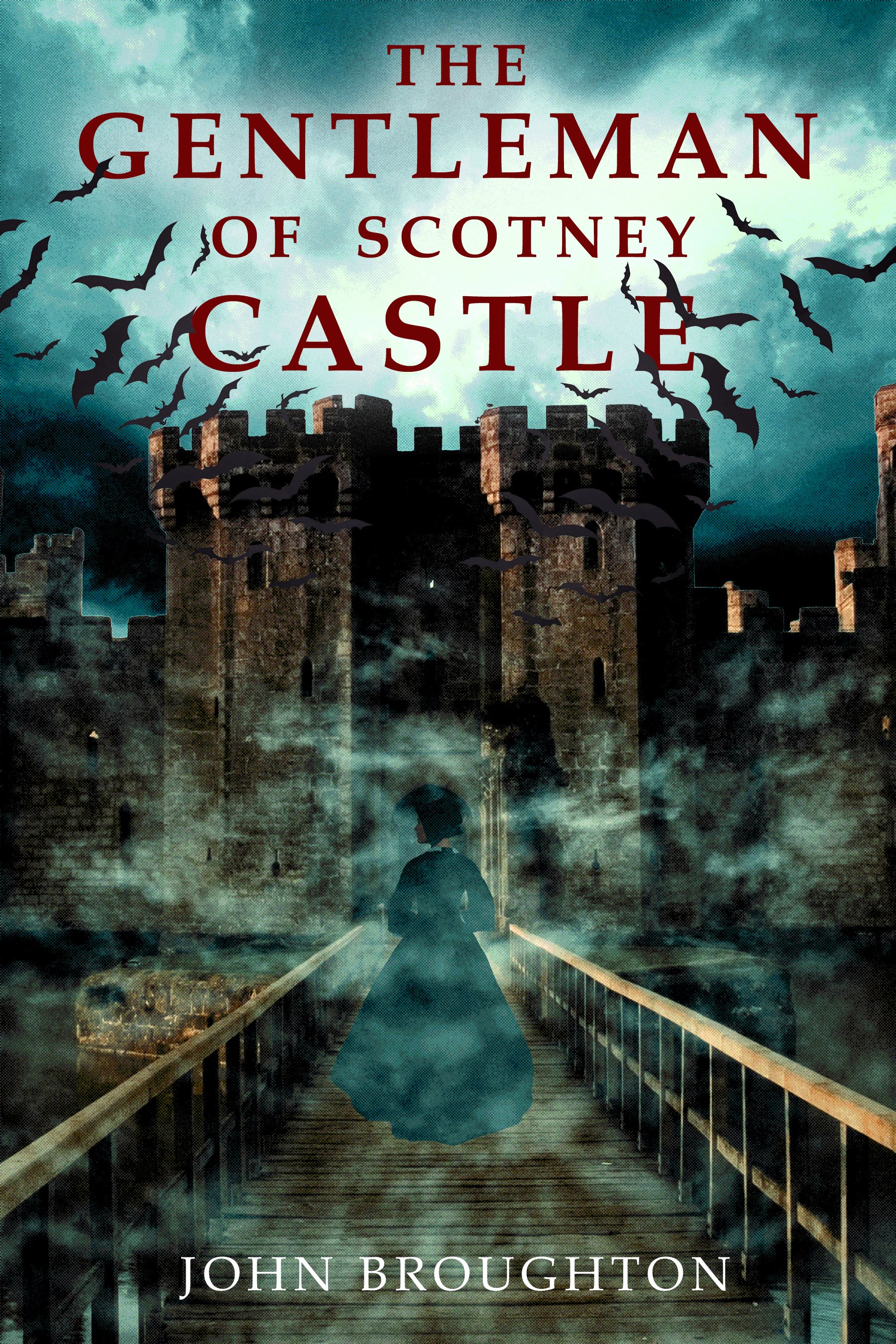
The Gentleman of Scotney Castle
The Gentleman of Scotney Castle
Eleanor Ashcroft sought inspiration in the quiet ruins of Scotney Castle—but the past was waiting for her.
Still reeling from heartbreak and eager to begin her gothic novel, Eleanor retreats to a centuries-old estate steeped in legend. But as she pores over forgotten archives and dreams grow strange, fragments of another life begin to surface—one not her own. Pages appear in her notebook she doesn’t remember writing. A name repeats: Arthur Darrell. A body never buried. A coffin filled with stones. And always, the whisper of something watching from the moat.
As Eleanor uncovers a trail of deception, murder, and a ghost who cannot rest, she begins to question whether she’s documenting a haunting—or being pulled into one. Blurring the line between author and character, past and present, The Gentleman of Scotney Castle is a modern gothic novella that explores the cost of telling someone else’s story… especially when they refuse to stay dead.
Start reading The Gentleman of Scotney Castle today—if you’re ready to be haunted.
Excerpt from the book
Scotney Castle, Kent, March 2023
The taxi nosed down a diminishing lane, its tyres popping and grinding against the uneven gravel, as if the road itself disapproved of the intrusion. Flanking the track, ancient beeches and sweet chestnuts pressed together, their trunks warped by centuries of wind and indifference, their branches knitted overhead like ribs that filtered the last of the late-October light.
The air was a chill gruel of rain and smoke and decaying vegetation. In the back seat, Eleanor hunched forward, her knees drawn up, one hand clamped on the handle of her suitcase, the other white-knuckled around her black notebook. She leant so far, she might as well have been sitting up front, her breath fogging the window as she tried to decipher the first, shrouded glimpse of her destination.
“There it is,” the driver said, not turning, one thick finger jerking upward toward the windscreen.
Eleanor squinted into the pebbled glass. At first, she saw nothing but the tangled limbs of rhododendrons and the afterimage of her own pale, anxious face. Then, as the taxi rounded a bend and the trees pulled back, the castle emerged—not so much risen from the landscape as half-submerged in it, as if the land were already in the process of reclaiming its stones. The towers protruded at odd angles, some intact, some gnawed to nubbins by centuries of frost and moss. Windows glared, empty of glass, their voids rimmed with anaemic ivy. The moat, only briefly visible, oily flashes between the reeds, ringed the structure in a darkly ironic embrace, less a defence than an ongoing threat.
Eleanor’s heart gave an unhelpful leap, the sort that suggested both terror and delight. She had always had a weakness for melodrama, but this—this crosshatched scene of gothic perfection—seemed close to parody. She felt, irrationally, that she had been cast into a role by some unseen director; she, the solitary writer, had arrived at the set, and soon enough the other characters would shuffle on stage, cloaked in their own personality deficiencies.
She imagined her opening line already: The castle rose from its own reflection, as though the earth itself had dreamed it into being. It was so lyrical it made her fingers twitch. Her pen itched in response, but she swatted down the urge—she had promised herself that this time, the first line would be earned, not gifted. She would live in the place, or at least among its ghosts, before she wrote anything worth reading. That was the vow.
The taxi braked at the rusted gate, stopping hard enough to knock Eleanor’s notebook to the floor. She fumbled for it, more embarrassed than grateful, while the driver’s hands hovered over the gearstick as if he were restraining a petulant child. The man did not glance back at her, not even to ask for payment, as though the castle itself had assumed responsibility for her now. Eleanor dug out a crumpled note, pressed it into his waiting palm, and managed an awkward, “Thank you for the—the ride.”
He grunted, already scanning the rear-view for his escape route.


Sed purus sem, scelerisque ac rhoncus eget, porttitor nec odio. Lorem ipsum dolor sit amet.