



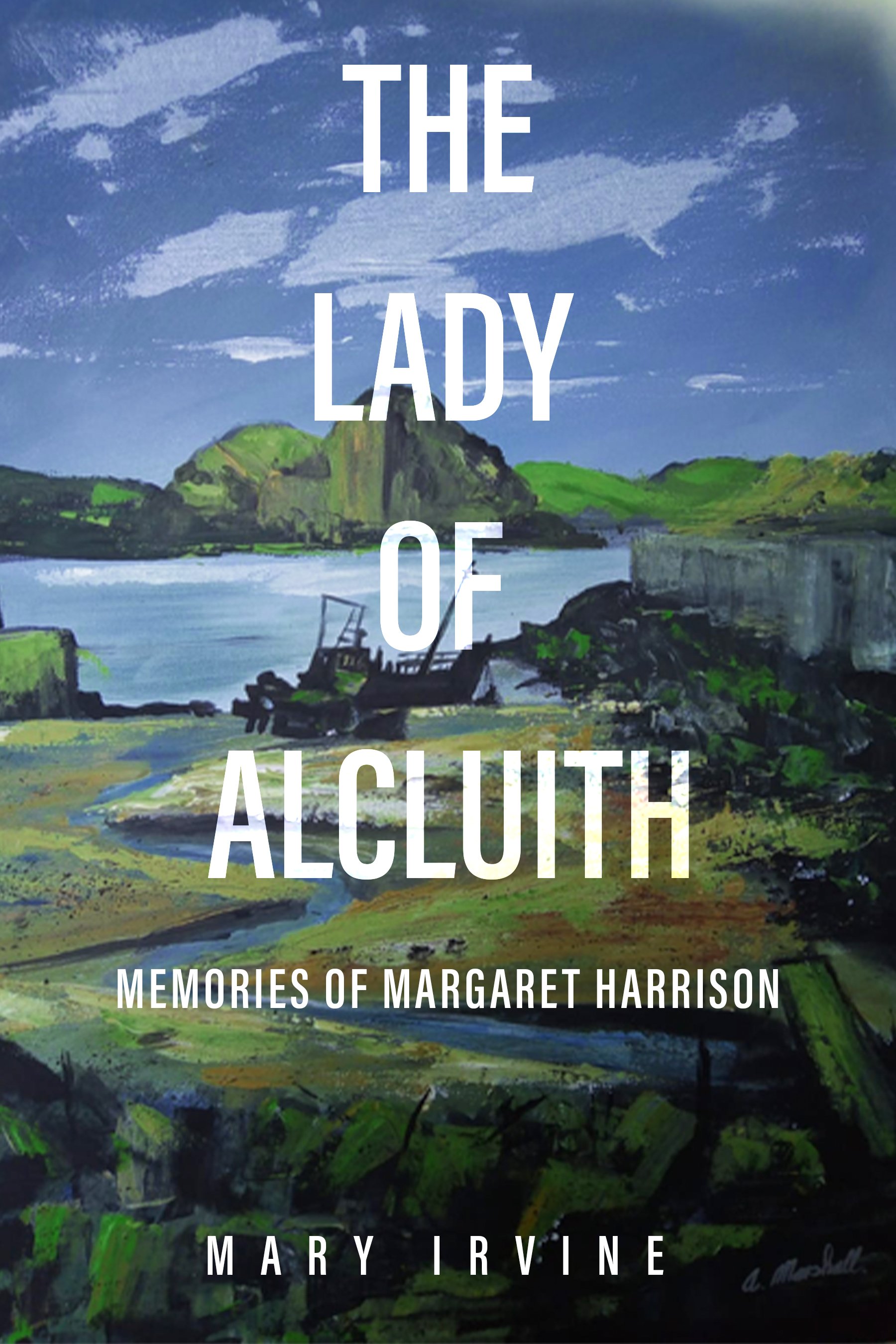
The Lady of Alcluith
The Lady of Alcluith
Margaret Harrison (1918–2015) was a committed Christian, poet, and peace activist whose life of quiet conviction left a lasting mark on Scotland and far beyond. Born Margaret Burnett in Dumbarton as the First World War drew to a close, she grew up in a close-knit family shaped by English roots and Irish ties, with regular visits to Donegal reinforcing a strong sense of heritage and belonging.
Shy in childhood yet intellectually gifted, Margaret left school early to work as a tracer at the Denny Company, where she embraced community life and discovered a love of theatre. Her Christian faith became central to her identity. As a Sunday school teacher, she wrote engaging booklets to help children understand the tenets of Christianity, and throughout her life she expressed her beliefs and reflections through poetry in both Scots and English.
During the Second World War she met Bobby Harrison, a Liverpudlian working at the torpedo range in Arrochar. A committed pacifist, Margaret made clear she could not share her life with someone contributing to the war effort. After the war they married and began a lifelong partnership dedicated to peaceful resistance, particularly opposing nuclear weapons. Their unwavering stance brought hostility and even imprisonment, yet they remained steadfast in their convictions.
Respected by people of all beliefs, Margaret’s influence extended across the UK and Europe. Drawing on fifteen years of meticulous research and testimonies from those who knew her, Mary Irvine’s The Lady of Alcluith tells the story of an ordinary woman who achieved extraordinary things. In the words of BBC Radio 4’s Last Word, she was “humble, with inner strength, sincere, open to others” — a legacy that continues to inspire.
Discover the remarkable true story of Margaret Harrison and explore a life shaped by faith, courage, and an enduring commitment to peace.
Excerpt from the book
Margaret was born on 5 th May 1918, the daughter of Margaret McIntyre Burnett (m.s. Colquhoun) and John George Burnett.
Into what sort of world was she born? WW1 was still being waged. It dragged on for another six months. In Dumbarton, life went on much as normal. There was the blackout but no local bombing. Snippets of news filtered through from the front, but official reports gave little information, including the terrible losses at Ypres in 1915, when many local men were killed. In unpublished diaries and memoirs, Margaret’s older sister, Elizabeth, twelve in 1918, later recorded that the war had little effect on them, unlike WW2. There was no rationing and no great shortages. The family were not personally affected, although two Donegal cousins had enlisted. These cousins had been ‘thrown out of lodgings’ by their landlord after a disagreement about football. Margaret’s mother took them in just for the weekend, but they ended up staying a few months until their enlistment in 1914. Both survived the war.
The appalling death rate of WW1 did lead to a shortage of manpower at home. There was more freedom for women; some had gone into factories, as well as keeping the trams running. Women’s pay did increase somewhat, but was still not equal to that of the male workers. Women’s clothing became more practical and less restrictive.
Although the tenements, built of red sandstone from the Dalreoch Quarry, still dominated, there was an increase in semi-detached villas being built in the outer areas of the town.
The Burnett family lived at 4, Dalreoch Terrace, Dumbarton. This was part of a block known locally as Spion Kop. The tenement was built in 1898. It is not inconceivable that some of the men who lived here may have fought in the Battle of Spion Kop in 1900, a disaster for the British, sustained during an attempt to relieve Ladysmith during the Second Boer War. The tenement is said to have resembled the flat top of the Spion Kop Ridge. It stood on the Renton Road on the left as you turn right from the Glasgow Road, driving out of Dumbarton towards the Vale. There is now a modern block of flats there. There was a drying green at the back and, up a bank, the railway to Helensburgh.
They had a one-bedroomed flat — a room and a kitchen with a recess where the parents slept. There was no plumbed-in bath, but a tin bath in front of the fire served them well. There was a shared toilet on the landing, but no bathroom. Margaret does write of the embarrassment of emptying chamber pots each day in the communal toilet.



Sed purus sem, scelerisque ac rhoncus eget, porttitor nec odio. Lorem ipsum dolor sit amet.