

Nonfiction · Memoirs & Biography
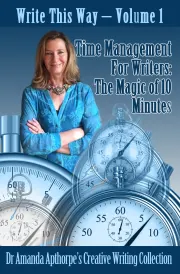
Time Management for Writers: The Magic Of 10 Minutes
Write This Way · Book 1
Audiobook availableExplore the book →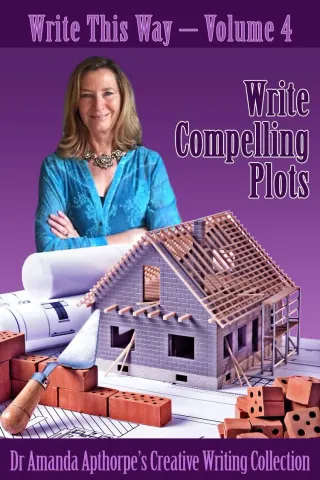 Nonfiction
 · Self-Help & Personal Growth
Write This Way · Book 4
Choose your preferred retailer on Books2Read.
THE STORY
We are enthralled by stories – tales told around the campfire, acted on stage, written down, filmed, painted, danced and sung. Why? Because we want to be entertained, to be inspired, to escape, to enter virtual worlds, to understand and to relate to others like and unlike ourselves.
It’s said that there are only seven storylines, but those seven have generated an extraordinary number of tales because their creators have told them from their own perspectives, their own point of difference.
The fourth book in Amanda Apthorpe's Write This Way series, 'Write Compelling Plots’, identifies the difference between plot and story, guides external and internal structural organisation and explains the significance of the narrative arc. You will discover how your central character’s desire, their limitations and their fear entwine to create the conflict that will drive your story. Drawing on the content within these pages, and your own point of difference, you too can create compelling plots.
In addition, this book explores the elements of setting and description. Part 3: Editing Toolbox identifies and corrects common editing errors in creative writing.
Get your copy →We write to tell stories; we write to fulfil a need in us; we write for pleasure…
Can you relate to any of these? Why do you write?
There’s such a wonderful feeling when you’re in a flow moment (albeit, in my case at least, these moments can be the exception rather than the rule). When in these moments, we can feel as though we’re tapping into something deeply and, if we have readers, we hope that they will feel it too. But will they?
It’s a curious thing that we have thoughts and images in our mind, and then we rely on transcribing them to the page using strange symbols (alphabet and punctuation marks) and utilise grammatical constructions. As we record these images and thoughts on the page, we might be very satisfied that we have captured the essence of them. And perhaps we have, for ourselves. But has it translated effectively for the reader? Would a reader see, understand the images and thoughts we have recorded as we see and understand them?
As well as learning, understanding and applying grammatical constructions, and honing the craft of writing, we should keep the reader in mind as we write. In many of the writing exercises, in this and in other volumes of this series, you are free to write what you like. In the classes I teach, these are ‘spontaneous writing’ exercises, and the objective is to write without limitations. While I offer students to share their writing with the class if they want to, it’s voluntary. Usually, writing this way can be hard to get going at first, but then becomes easy, and the writing flows. I see them struggle at the beginning to pick up momentum, then see how they become absorbed, their writing rate increases, and they are almost reluctant to stop.
Amanda Apthorpe
Nonfiction · Memoirs & Biography
Write This Way · Book 1
Audiobook availableExplore the book →
Nonfiction · Self-Help & Personal Growth
Write This Way · Book 2
Audiobook availableExplore the book →
Nonfiction · Self-Help & Personal Growth
Write This Way · Book 3
Audiobook availableExplore the book →EXPLORE SIMILAR STORIES
Nonfiction · Self-Help & Personal Growth

Nonfiction · Self-Help & Personal Growth
Nonfiction · Self-Help & Personal Growth