



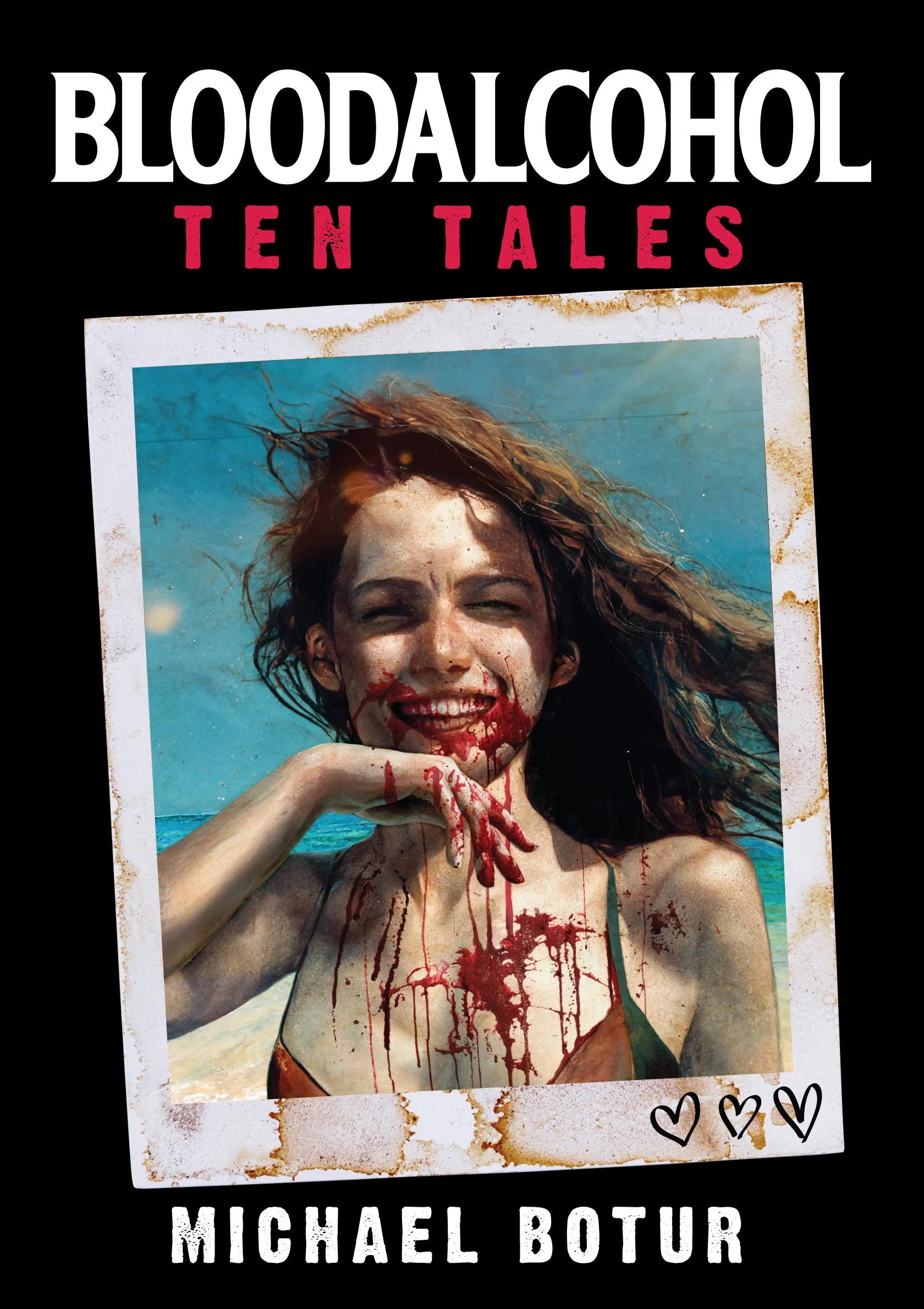
Facing the Darkness Within: How Horror Stories Reveal the Struggles of Everyday Life

Horror, at its most honest, doesn’t live in monsters or masks—it lives in us. In Bloodalcohol, Michael Botur invites readers to peer through the smoke of daily survival, where the terrors are heartbreakingly human. Here, fear doesn’t come from shadows in the woods but from the people we love, the homes we try to build, and the fragile faith we cling to when the world turns cruel. Botur’s brand of New Zealand horror takes ordinary life—schoolyards, family dinners, hospital corridors—and twists it until the truth of our desperation is revealed.
What makes these stories so powerful is how they pull everyday anxieties into the realm of nightmare. Parents and children circle each other like adversaries, each terrified of becoming—or disappointing—the other. Nature, once a refuge, becomes an unforgiving mirror to humanity’s greed and arrogance. The longing to be seen, to be remembered, drives people to acts that are both horrific and heartbreakingly familiar. In this way, Botur’s collection isn’t only about fear—it’s about exposure. He forces us to look at what we spend our lives trying to conceal: our hunger, our failures, our faithlessness.
Each story carries a pulse of social realism beneath its terror. The man desperate to gain fame at any cost, the mother trying to love a child she doesn’t recognize, the teen uncovering the brutal secrets of his family—these aren’t supernatural villains or heroes. They’re ordinary New Zealanders, caught in the kind of quiet horror that hums beneath modern life. The landscapes—coastal towns, isolated highways, and bushland that seems to breathe—frame their suffering in ways that feel both intimate and universal.
Botur’s writing stands out for its rawness. His characters don’t speak in metaphor—they spit, scream, pray. The prose smells of petrol and salt, of beer-stained breath and wet soil. It’s a realism that refuses to comfort. And yet, there’s tenderness here, too. Amid the blood and fear, moments of grace emerge: a father’s guilt, a mother’s endurance, a boy’s fleeting glimpse of forgiveness. The horror becomes a kind of confession, one that asks not what scares us, but what we are willing to face in ourselves.
In Bloodalcohol, horror is not a genre—it’s a language for life. It’s how we speak about broken families, faith lost and found, and the gnawing loneliness of being human. Botur reminds us that to confront the darkness is to admit we’re alive inside it. These stories linger because they tell the truth: that even in our ugliest moments, something sacred still beats beneath the skin.
Sed purus sem, scelerisque ac rhoncus eget, porttitor nec odio. Lorem ipsum dolor sit amet.