




Daughter of the Steppes (Fascinating Lives Series)
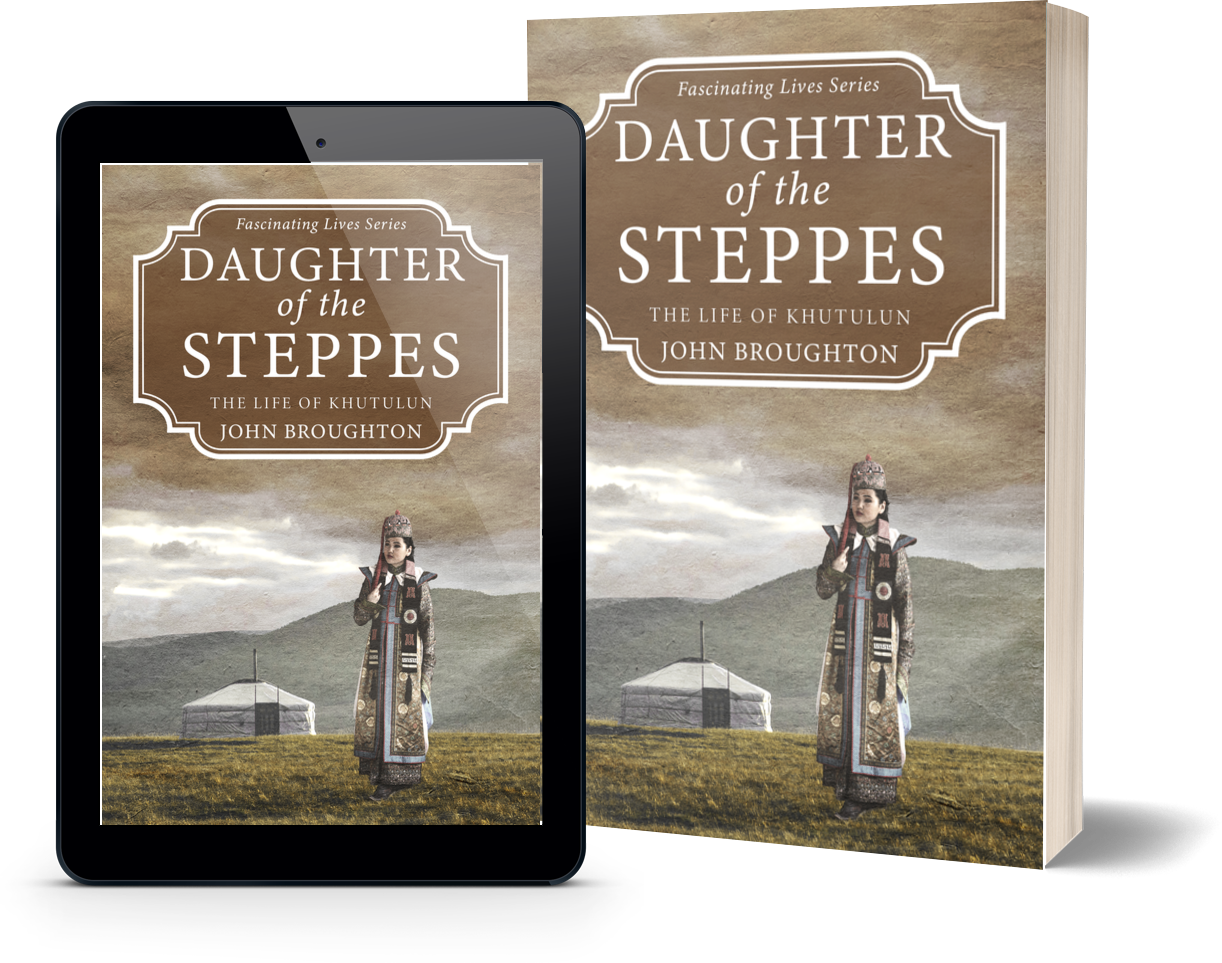
A warrior. A daughter. A legend.
In the heart of 13th-century Mongolia, Khutulun—daughter of Khaidu Khan and blood descendant of Genghis—rises above fifteen warrior brothers to become the fiercest fighter of them all. Trained from childhood in horseback archery, swordplay, and wrestling, she vows to marry only the man who can defeat her in combat. None ever do.
As Kublai Khan tightens his grip on the steppes, Khutulun leads her people in defiance—commanding armies, building alliances, and shaping her own legend. Her victories echo across the plains. But when her father names her as heir, her greatest threat emerges not from a foreign army, but from betrayal within her own family.
Daughter of the Steppes is a sweeping historical epic that brings to life a forgotten icon—a woman of courage, cunning, and uncompromising will who challenged empire and tradition to shape her own destiny.
Discover the untold story of Khutulun. Read Daughter of the Steppes today.
Excerpt from the book
The wind that swept across the valley of the Onon that spring carried neither dust nor snow, but the clean, wild smell of grass about to burst into green. The river, fed by mountain rivulets, ran swift and silver, slicing the steppe in two. On both sides, low hills rolled like sleeping beasts, their pelts still patched with frost. At dawn, fog pulled away in tatters, revealing the endlessness of earth and sky—blue so deep, the first glance was drowning.
In the camp of Khaidu Khan, the gers stood like a fleet of white sails on an ocean of earth, their canvas walls blazoned with red and black sigils: horses rampant, wolves’ eyes, the crescent moon’s pale tooth. The banners snapped against the wind, evoking the voices of ancestors. Men in lacquered leather and gilded iron rode in and out, bearing war messages, tending to the morin khulan , sharpening sabres. Boys in training stalked each other through the tents, their heads close together, their hands already calloused. Women stooped to milk mares and comb shaggy foals, or gathered in quiet groups to twist the sinews and stories of their people into new songs. The camp was a living beast—every ger a lung, every soldier a heartbeat—restless, bracing for the season when the grass grew back and the roads became less muddy.
Yet, on that night, all thoughts of battle and plunder blinked out like embers. The quivers and bridles hung motionless. A single ger near the camp’s heart, larger than any other, hummed with the quiet terror of birth.
Inside the khan’s great ger, behind felt walls painted with suns and hawks, the air was thick with the zest of burning juniper, sheep-tallow lamps, and the tangy copper of blood. The khan’s wives circled the labouring queen, faces streaked with sweat and soot, their voices threading sharp as needles through the candlelight. For the eighth time, the woman in labour keened out to the Eternal Blue Sky, to the Earth-Mother whose name was never spoken aloud. It was her eighth child, and she had known pain before, but now the pain was like a wolf at her spine. Her eyes rolled white, but her voice never cracked. In her arms, she clutched a strip of red silk—the colour of blessing, of blood, of war.
Three nights before, the queen had woken shivering, chilled by the raw edge of prophecy. The vision returned even as she laboured: a great stallion, black as cloud-shadow, thundering across an endless plain, with a girl astride it. Her child, grown tall, hair streaming wild behind her, arms bare to the cold. She loosed arrows by the fistful, and each struck true, blossoming flame where it landed. The girl laughed—not a woman’s laugh, but the hoarse bark of a war-cry. Above her, a hawk, white as the moon, circled then stooped to alight on her shoulder, talons gentle but certain. The shamans had been summoned, roused from their sleep by messengers pounding on tent poles, their drums still echoing the rhythms of the dream. In the queen’s vision, they read only one future. “A daughter will come,” they foretold, “not to be hidden in silk or behind the hearth, but to ride in iron, and to break the destiny of men.”

Sed purus sem, scelerisque ac rhoncus eget, porttitor nec odio. Lorem ipsum dolor sit amet.