



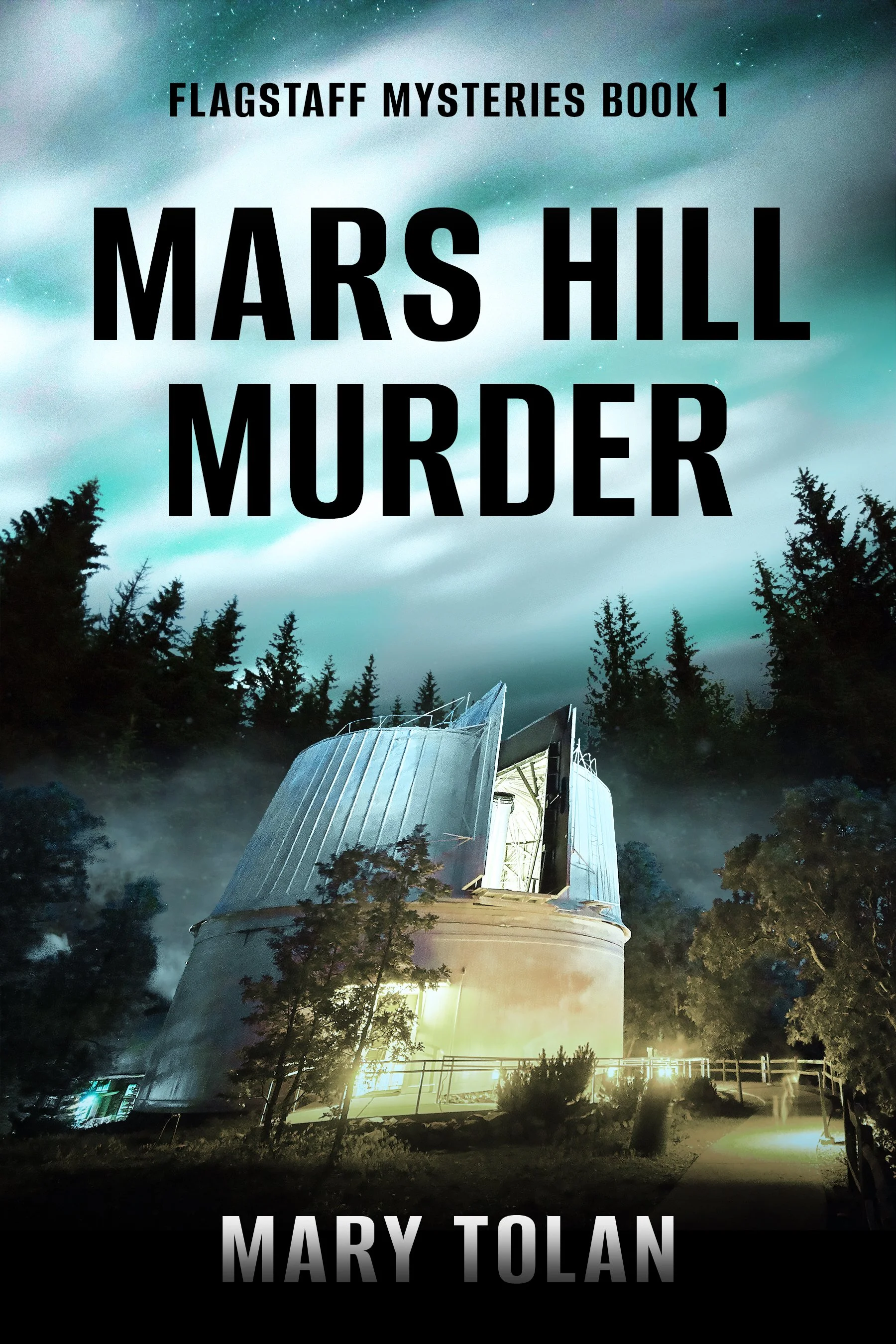
Mars Hill Murder (Flagstaff Mysteries Book 1)

A Mountain Town Hides a Killer
In 2010, a string of brutal stabbings shatters the calm of Flagstaff, Arizona. From the historic Lowell Observatory to a Route 66 motel, three victims—young, working-class, and of color—are attacked without clear motive. As the community reels, so does local reporter Miles Harper, who’s struggling to keep his job at the Flagstaff Gazette. Solving the case could save his career—or cost him his life.
Miles joins forces with Flagstaff police detective Luis Ortega, an old college friend, as the pair chase leads through a landscape of rising political tension, racial profiling, and anti-immigrant sentiment. At the same time, newcomer Maddy Sullivan is trying to disappear—escaping a violent past that’s now catching up to her.
As Miles and Maddy form a tentative bond, their lives intersect with those of the victims, the suspects, and the killer—who’s closer than anyone thinks. Set against the pine forests and snowy peaks of northern Arizona, Mars Hill Murder is a gripping crime debut that blends mystery with a timely look at fear, identity, and justice.
Start the Flagstaff Mysteries series with Mars Hill Murder—available now.
Excerpt from the book
Miles Harper left the newsroom and walked over to cover the protest at Wheeler Park. He looked over the gathering assembly in Flagstaff’s small, downtown park that sat between the library and city hall.
About one hundred people stood in front of a temporary stage set up next to the dry Rio de Flag. The speaker, a young, fit Hispanic woman, spoke to the crowd, alternating between English and Spanish. The people had gathered to protest against the Arizona law that cracked down on illegal immigration.
She called out, “Si se puede,” and the crowd chanted the words back to her.
“Yes we can,” she said, and they echoed her again.
“SB 1070 equals discrimination and racial profiling,” the young woman said in Spanish then English. The crowd booed and hissed.
“It means that white people can come and go as they please, but brown and black and red people can be stopped, even if they’ve lived here for generations.”
Miles pulled out his narrow reporter’s notebook out of his back jeans pocket and began writing as fast as he could. He copied down the words of some of the placards the people held high.
“Does my face look like an alien?”
“Arrest me, not my friends!”
While most of the people at the rally did seem upset, there was also a festive feel to the gathering, Miles thought. A mix of urgency and camaraderie.
Miles walked through the crowd of twenty-somethings, middle-aged and old people, about two-thirds Hispanic and a third Anglos, with some Native Americans sprinkled throughout the crowd.
After jotting down some of the quotes from the speakers, Miles walked over to a group of counter-protesters, who were waving their own signs.
“Keep our boarder’s safe,” one read. In need of some spell check, Miles thought, trying to keep his own prejudices in check. If he weren’t a journalist, he’d probably be organizing gatherings like this, and arguing with this small group of counter-protesters. But, as a reporter, he knew he had to keep his neutral stance so he could tell a story to his readers through unbiased eyes. He approached a woman dressed in red, white, and blue who was deep in discussion with a couple others donning patriotic colors.
“Sorry to interrupt, Ma’am. But can I ask you a few questions?” Miles began. “I’m a reporter for the Gazette.”
“I’m surprised you’re even willing to talk to our side,” the woman responded.
“Oooooh!” one of her group responded.
“Go get ‘im, Jillie,” another teased.
Her friends moved closer, and the woman faced Miles.
“What do you want to know then?”
“Just why you’re here. I assume you’re against the message of the main protesters.”
“You can say that again,” she said, nodding toward the platform. “I don’t have anything against people coming to our country, but let’s keep it legal. None of this sneaking over the borders. That’s a crime.”
“It is,” Miles conceded. “What about those who are fleeing violence and gangs, and who say they want to help their children have better lives?”
“Oh, you’ve bought all that hook, line, and sinker, have you?”
“I’m just asking.”




Sed purus sem, scelerisque ac rhoncus eget, porttitor nec odio. Lorem ipsum dolor sit amet.