



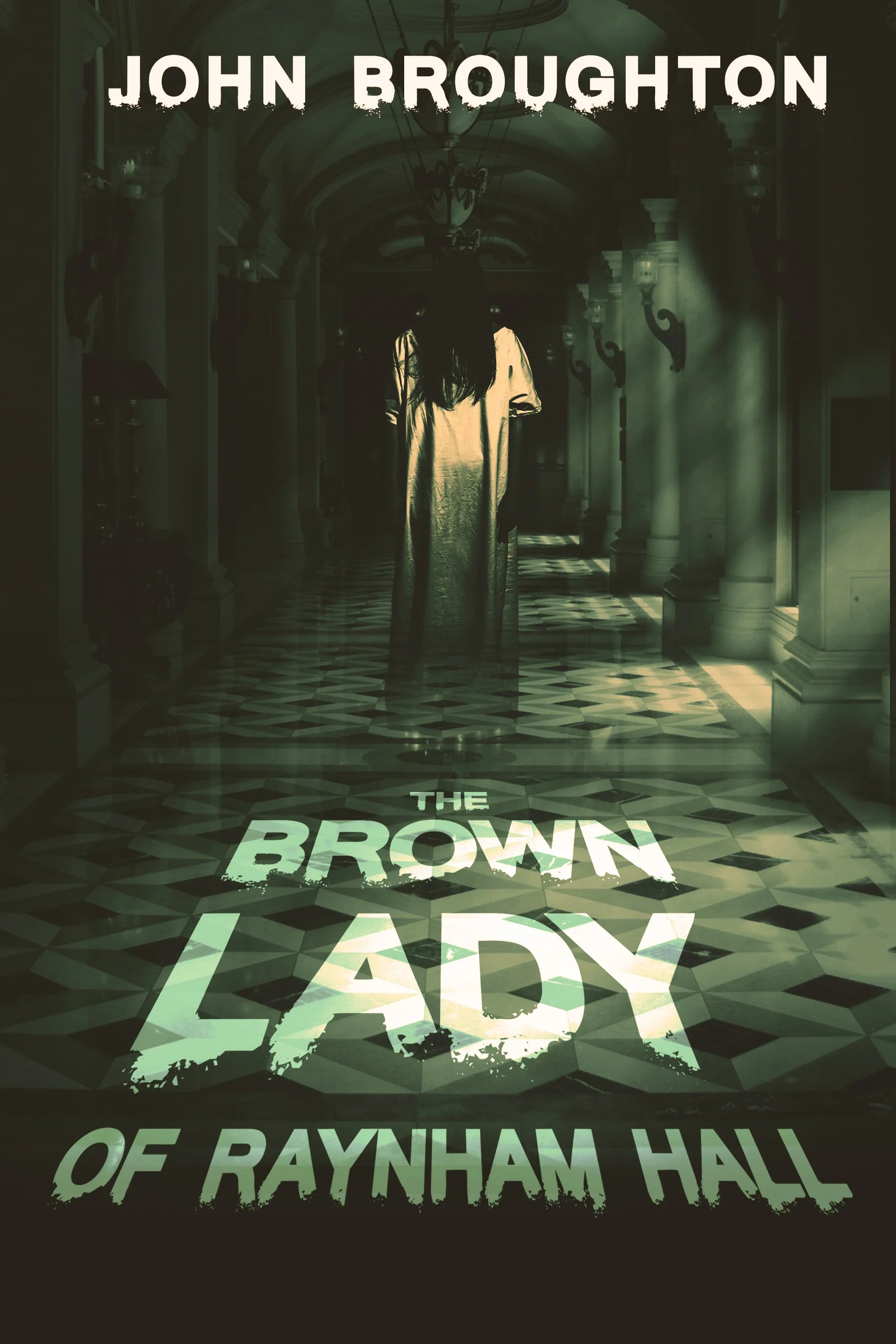
The Brown Lady of Raynham Hall
Her Death Was a Lie. Her Story Became a Legend.
Imprisoned within Raynham Hall by a husband determined to protect his honour, Dorothy Walpole is erased from society and left to die in obscurity. But her suffering does not remain buried. Her restless spirit begins to haunt the great house, becoming the infamous Brown Lady of Raynham Hall.
Centuries later, historian Dr. Alice Paxman uncovers a hidden diary that reveals the truth behind one of England’s most enduring ghost stories. As past and present collide, Alice must risk her life to expose a chilling history of betrayal, confinement and forgotten injustice—and finally lay Dorothy’s troubled spirit to rest.
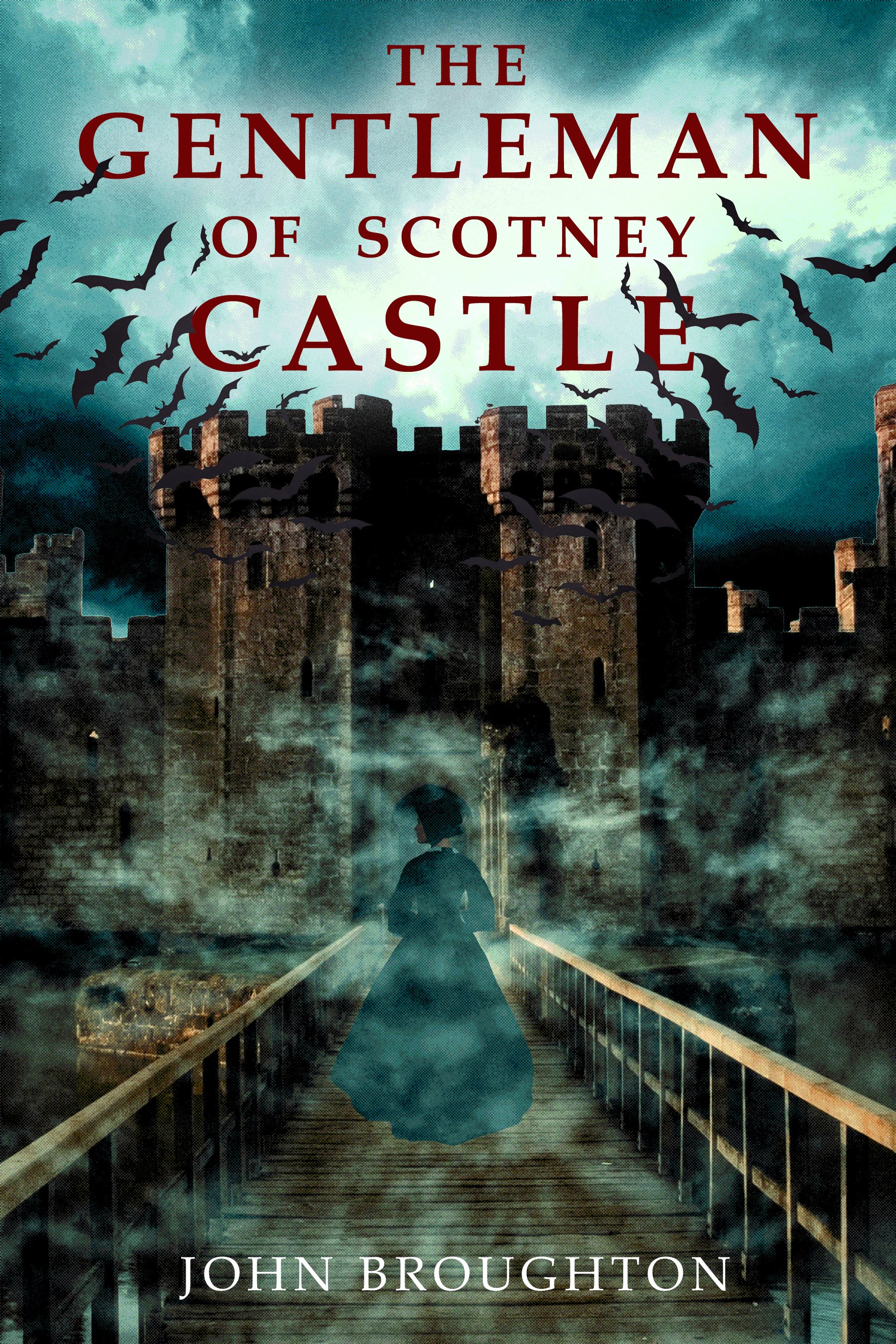
*The Brown Lady of Raynham Hall* by John Broughton is an atmospheric gothic novel blending historical fiction, supernatural mystery and a haunting story of memory, redemption and the power of being remembered.
Discover the truth behind the legend in *The Brown Lady of Raynham Hall*.
Excerpt from the book
Houghton Hall, Norfolk, October 1710
The balustrades of the grand staircase gleamed with freshly burnished brass, each curve and scroll catching the candle’s fire as guests ascended from the vestibule to the upper galleries of Houghton Hall. At every landing, footmen in liveried coats whispered the names of new arrivals, their voices adding a counterpoint of ceremony to the thinly veiled gossip that billowed through the house. The Duke of Marlborough, resplendent in a coat of cerulean velvet, was rumoured to have brought with him not only his wife, but also a notorious mistress secreted amid the Italianate statuary of the winter garden. Below, a trio of servants made frantic but silent attempts to right a toppled urn, its contents of spilled rose petals drifting across the marble like bloodstains.
The ballroom itself was a theatre of light: the chandeliers, crafted from Venetian glass and dripping with pendants, multiplied their hundred points of flame into a universe of tiny stars. The mirrors gilded into every available wall offered infinite reflections of the revellers—their powdered wigs, their stiff brocades, their jewelled hands fluttering over fans and wineglasses—so that even an idle gesture acquired the drama of spectacle. At the far end of the room, a raised dais supported the musicians, who stood in the shadow of a massive painting depicting the late King Charles astride a rearing white horse. A minuet was in progress, the steady pulse of the harpsichord overlaid by the plaintive cries of violins and the mournful drone of a viola. The dancers moved in precise quadrilles, the older gentlemen straining with dignity, the youngest ladies barely containing their laughter as they negotiated the labyrinthine steps.
Near the windows, where the air was cooler and the noise less oppressive, Miss Dorothy Walpole stood in rigid composure. Her mother had chosen the gown for her—Parisian silk, palest blue, with a train that threatened to tangle underfoot unless she kept perfect poise, and sleeves so tight about the shoulder that even the gentlest movement was an act of will. Dorothy’s hair had been coiled, braided, and powdered into a structure that defied wind and logic, though a single curl, as stubborn as Dorothy herself, had escaped to dangle beside her right cheek. She looked out upon the moonlit parkland as if preparing to leap from the window, and not merely to observe the distant torches of arriving carriages.
All her life she had been tutored in the art of stillness. From infancy, she had learned to hold her tongue, to smooth her brow, to speak only when certain of the answer required. Even now, in the prime of her first season, Dorothy’s presence was a study in concealed labour; her thoughts darted and doubled, but on the surface, she betrayed nothing. Only her hands—gloved in dove-grey kid, tightly clasped before her—confirmed the tension in her body.


Sed purus sem, scelerisque ac rhoncus eget, porttitor nec odio. Lorem ipsum dolor sit amet.