



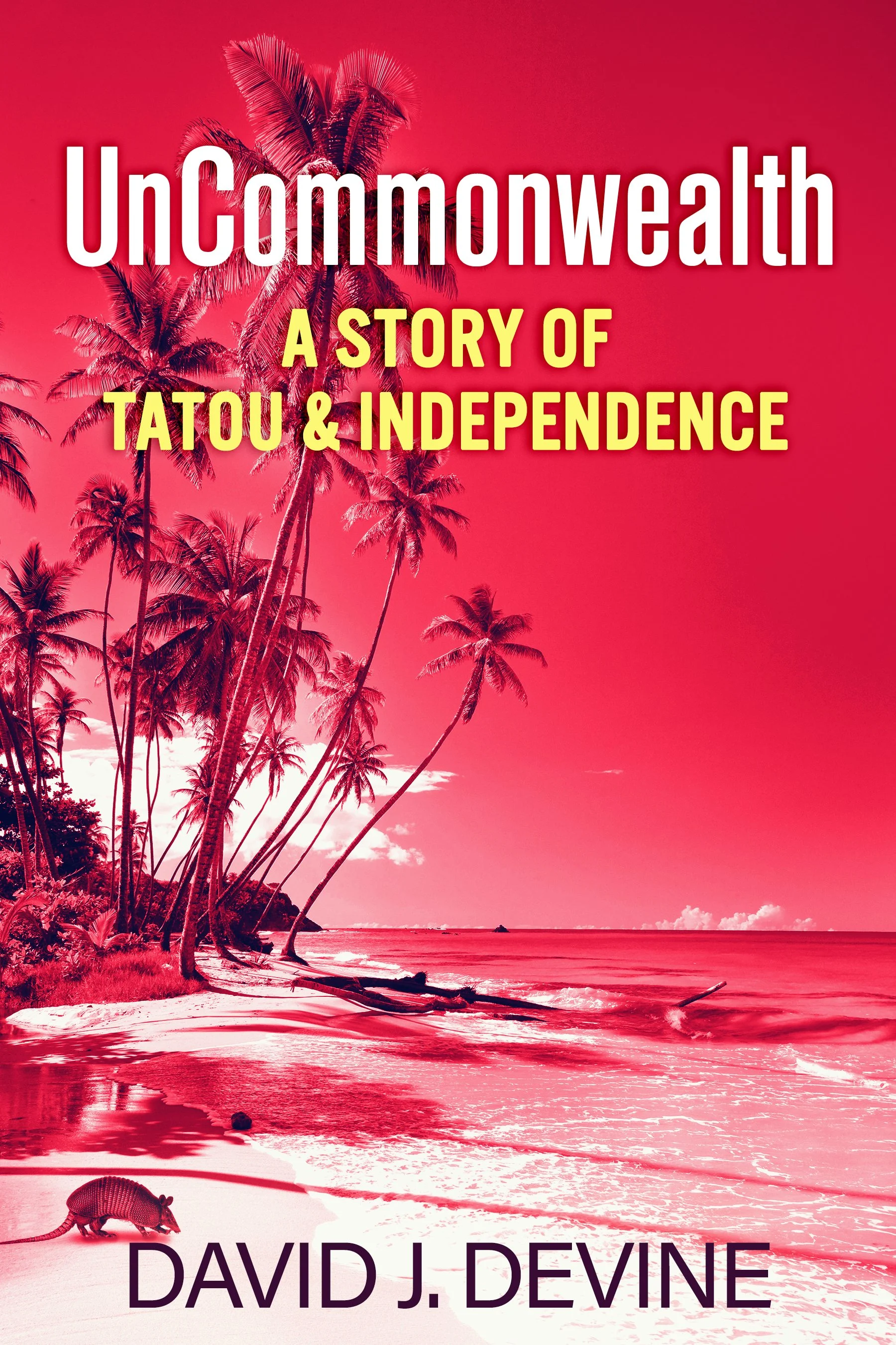
UnCommonwealth
UnCommonwealth
Grenada is celebrating Jubilee, the 50th anniversary of its independence. But beneath the pageantry and national pride, old powers linger, new ambitions gather, and a quiet struggle for the island’s future begins.
Oisin Finnegan arrives in Grenada as a disgraced former agent, scientist, and chronic drinker with little left to lose. Patricia Arnold, a marine biologist devoted to protecting her homeland’s fragile reefs, ecosystems, and way of life, sees the danger others are willing to ignore. When the two uncover a conspiracy tied to foreign influence, political compromise, and the island’s volcanic power, they are pulled into a fight far larger than either expected.
As loyalties fracture and hidden plans come to light, Oisin must decide whether to keep destroying himself or stand for something again. With Patricia and a small circle of unlikely allies, he takes on a threat that could reshape Grenada’s future and alter the balance of power far beyond the Caribbean.
David J. Devine’s UnCommonwealth is a tense political thriller about independence, corruption, second chances, and the quiet courage it takes to defend a place worth saving.
Read UnCommonwealth and enter a Caribbean thriller where personal redemption and national sovereignty collide.
Excerpt from the book
Lin Fa was the low man on the Supreme Ministers’ totem pole. His territory was Latin America and the Caribbean. Even Oceania and Africa were more important. None of these had the economic prowess of North America or Europe, nor were they as politically sensitive as Eastern Europe or the Middle East. Lin Fa, in a not-so-rare example of personal capitalism, yearned for recognition from Beijing.
The Supreme Ministers were gathered for the launching of the state-owned China Ocean Shipping Company’s (COSCO) latest vessel. They were confused as to the significance, as COSCO operated over 1,400 containerships. In China, vessels are not christened; they are launched with little fanfare. China did not draw a distinction between public and private enterprise.
A temporary grandstand had been placed near the edge of the dock. The oldest and heaviest Ministers sat in the first row. The younger and sprier climbed to the fourth and fifth benches. Lin Fa was helped to the second row. There was a makeshift stage with a canvas backdrop.
As Wan Min, COSCO’s Chairman of the Board and Party Secretary, took the podium, Lin Fa folded his Chinese edition of the Wall Street Journal. The Science Section had an article on Iceland delivering volcanic-sourced electricity to the United Kingdom. A Chinese professor was on the development team.
Wan Min, “In 1980, China had the 10 th largest economy in the world. By the year 2000, it was the 6 th largest. For the last 15 years, we have been second largest to the United States. Last year, the United States economy was ¥3.7 trillion—25% of the world’s gross domestic product. China’s economy last year was ¥2.5 trillion, or 18% of the world’s economy. This stagnation is unacceptable.”
The Ministers with plum positions feared they might lose rank. The other Ministers, besides Lin Fa, feared becoming sacrificial lambs, losing position and status. Lin Fa, though, saw an edge that would allow him to climb the totem pole.
The Supreme Minister of North America Affairs spoke, “Honorable Wan, we have inroads in all aspects of America’s economy—technology, communications, commerce, construction. Where do you look to make up the 7%?”
Wan waved to an aide, and a canvas fell to the ground. The Ministers could see the new vessel; it was unlike any containership they had seen before.
“We need to do it one percent at a time. Grow ours and diminish theirs. Here is two, three, perhaps four percent.”
Again, the Supreme Minister of North America Affairs was the spokesman. “The bridge is forward; there’s no smokestack!”
Wan puffed with pride. “This is an electric-powered containership, a prototype designed for domestic shipping. We plan to introduce a fleet of 1,200 10,000 TEU containerships to replace today’s petrol-based fleet. No other nation or company has this technology. Our cost of transportation will fall 45%. The market will respond, but we will have an advantage for years.”
Lin Fa was intrigued. “Pardon me, Most Honorable Wan, will they have transcontinental range? How long will a vessel have to stay in port to recharge?”



Sed purus sem, scelerisque ac rhoncus eget, porttitor nec odio. Lorem ipsum dolor sit amet.