



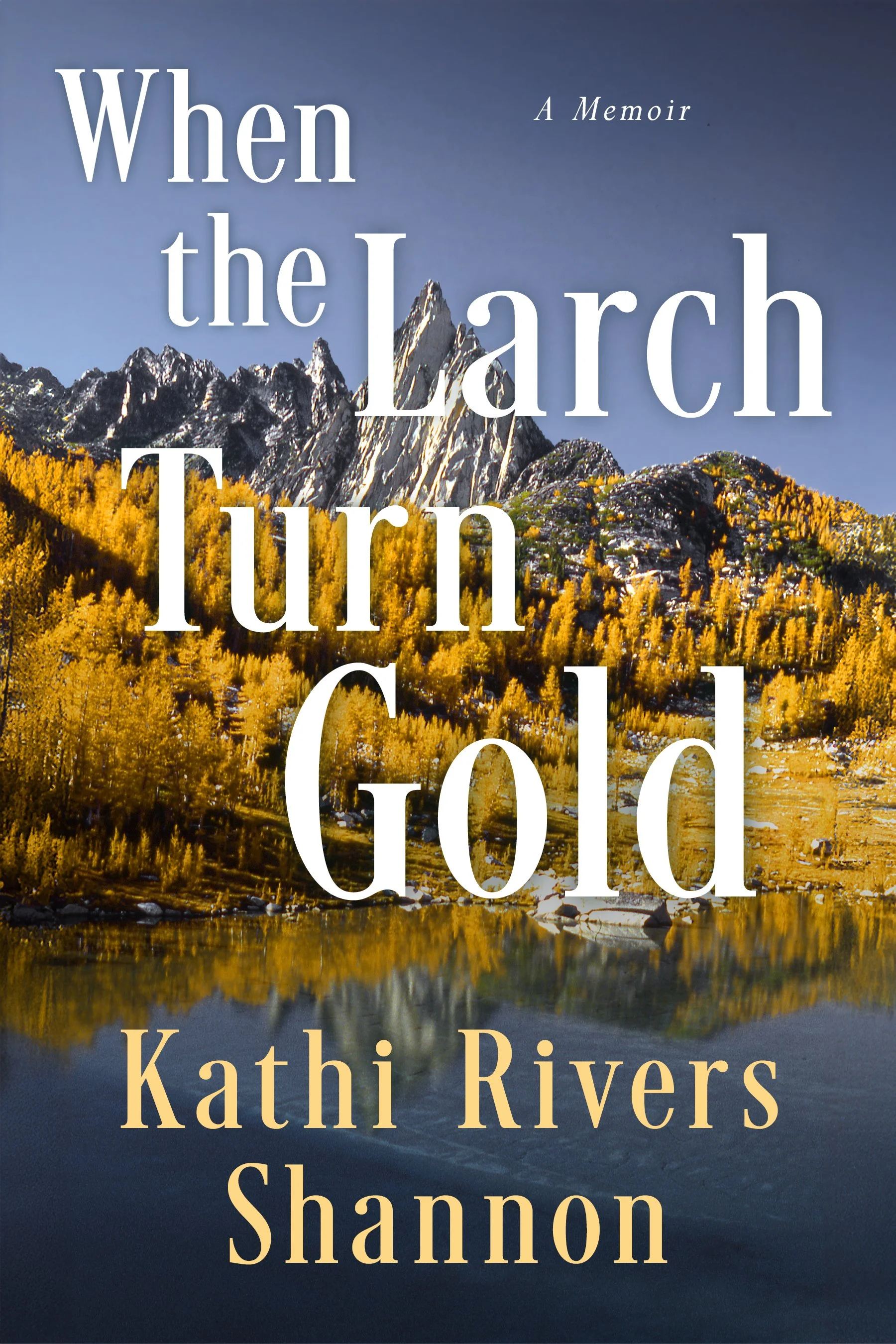
When the Larch Turn Gold
A Golden Pilgrimage Through Time and Wilderness
For over 60 years, two couples—first Bill and Peg Stark, and later Greg and Kathi Shannon—returned each fall to Washington's Enchantment Lakes Basin, drawn by the fleeting brilliance of the alpine larch trees turning gold. When the Larch Turn Gold is their shared story of devotion—to a wild, unforgiving landscape, to each other, and to the act of returning, no matter the obstacles.
From the Starks' first visits in 1959 and their whimsical naming of lakes and peaks, to the Shannons' long, determined journey through illness and wildfire, this memoir traces how a single mountain basin became a lifelong compass. Woven through the beauty of the Cascade Mountains are stories of health struggles, forest policy, conservation battles, and the hard realities of wilderness work. But more than anything, it’s about the relationships—between people and place, between mentors and friends, and between memory and the land that shapes it.
Whether you're drawn to stories of endurance, wild places, or quiet friendship, When the Larch Turn Gold invites you to witness the deep and lasting impact of returning to the same trail, year after year.
Order your copy today and experience the Enchantments through sixty golden Octobers.
Excerpt from the book
Hunched over hiking poles. Starved for air. Convulsing in great gasps. Experimenting with steps half the length of my boots to conserve energy as I shuffled around the corner. Stopping for a short spell to relieve my struggling lungs every fifth step or so.
I wasn’t even on the steep part.
You’d think I was climbing Mt. Everest.
I knew I shouldn’t have been on this trail. I was 66 years old and suffered from a debilitating disease. Exertion, physical or mental, makes symptoms worse, sometimes permanently.
This was my brain talking.
My heart said otherwise.
My tiny steps made little difference in my breath. My poles wobbled in my clutched hands. I glanced up to scout ahead.
“Oh,” I stuttered.
Four pairs of eyes were watching me. I fumbled with the mask dangling around my neck, struggled with pulling up the cloth and looping the ties around my ears to cover my mouth and nose, severe hand tremors dancing a jitterbug.
What must these four young backpackers think of me? “Who or what is this curious creature, old, bent, shaking, gray, wrinkled, nine miles from the trailhead?”
They continued staring, eyes kind above their masks, standing in single file, stances patient, paused on their way down the Snow Lakes trail.
“I’m just slow,” I mumbled, not wishing to stop and talk, as I would have a year earlier. I pushed my pace toward the other side of the large granite slab, eyes averted, breath held, scared of Covid 19.
In the recent past, young hikers I would meet on the trail would say such things as “you’re such an inspiration,” “just one step at a time,” “I want to be like you when I grow up.”
I would reply, “Well, you have to keep going because if you stop, you’re done.”
I would take a break and chat then, always delighted to share my experiences in a landscape that inspired references to Norse mythology and King Arthur legend, repeating the story of how the lakes came by their names.
But not on this day.
As I sidled around the four young backpackers, a fifth joined them at the end of the line, a black and white handkerchief tied over the lower half of his face like a bandit. He watched me for a moment. Perhaps he thought I resembled a witch and did, indeed, belong in a myth.
“Ma’am… Ma’am,” he said. “Are you alone? Do you have someone with you?”
“My husband…is behind me…around the corner,” I said, eyes still averted, as if that would stop the virus from reaching me. At the time, we understood little about its transmission, and it would be months before a vaccine would be available. Greg and I had mostly sequestered ourselves inside our house. We ordered groceries online, wiping down packages with an alcohol solution before stowing them away. Greg shut down his acupuncture practice. My sisters sewed face masks for us lined with some type of barrier cloth to seal out virus particles. We spread delivered newspapers on our deck to sterilize the paper with sunlight, anchored by rocks so the pages wouldn’t blow away. I, particularly, was paranoid of catching covid because of an already compromised immune system. Greg’s mother had died from the virus in July.

Sed purus sem, scelerisque ac rhoncus eget, porttitor nec odio. Lorem ipsum dolor sit amet.