



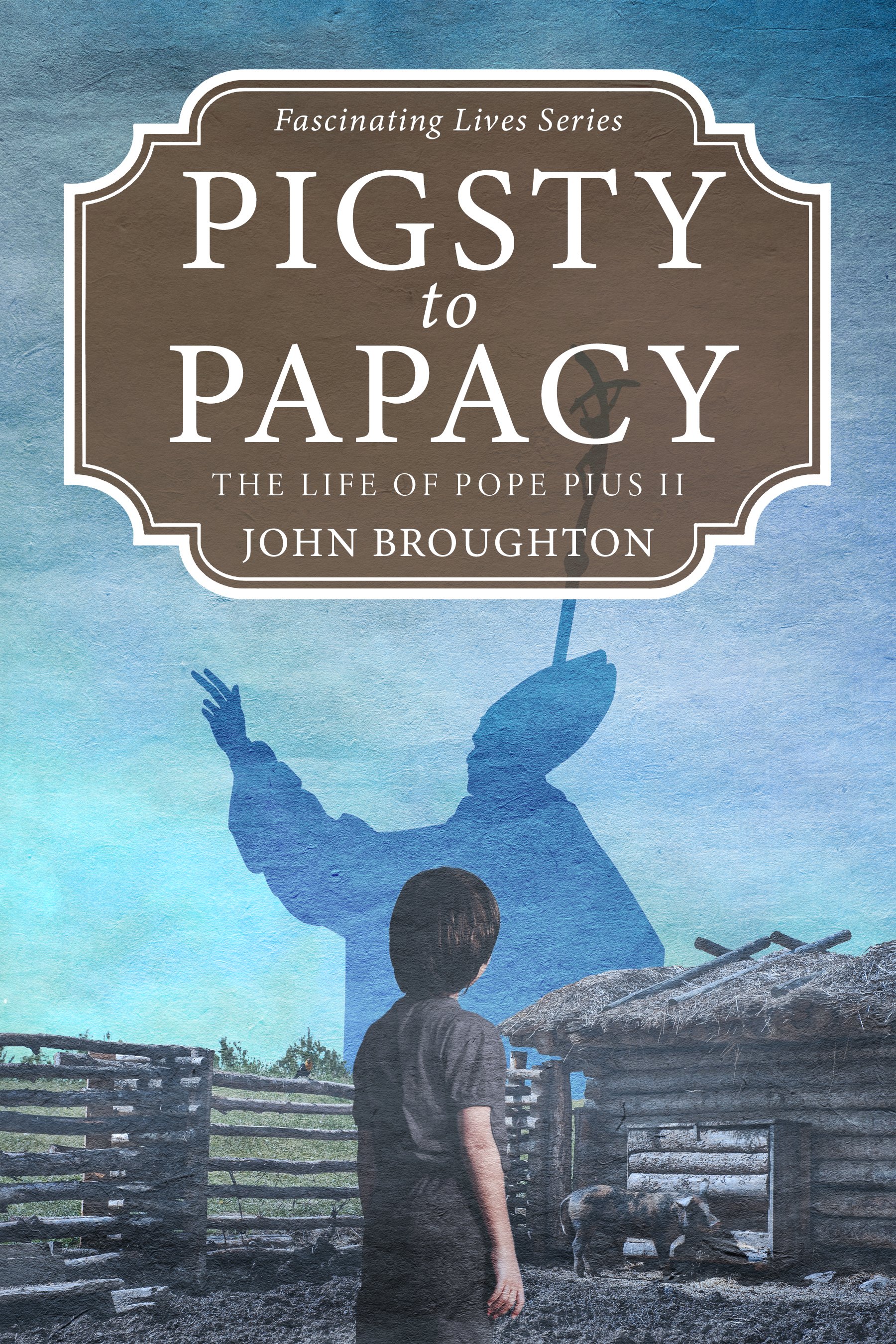
Pigsty to Papacy (Fascinating Lives Series)
From Pigsty to Papacy: The Rise of a Renaissance Pope
Set against the backdrop of war, heresy, and political intrigue, Pigsty to Papacy charts the extraordinary rise of Aeneas Sylvio Piccolomini—from farmhand in rural Siena to Pope Pius II, one of the most fascinating figures of the Renaissance.
With vivid historical detail and a deeply human portrait of its protagonist, this novel follows Aeneas through intellectual awakening, diplomatic missions across Europe, passionate affairs, and the treacherous world of 15th-century Church politics. Scholar, lover, reformer, and visionary, Aeneas’s journey is shaped by ambition, devotion, and an enduring sense of destiny. From the mud of his family’s estate to the marble halls of power, Pigsty to Papacy captures the making of a man—and the legacy of a pope.
Start reading Pigsty to Papacy today and discover the dramatic life of a Renaissance statesman who helped shape the modern world.
Excerpt from the book
Corsignano and Siena, 1426
The small village of Corsignano in Siena was bustling with activity as Sylvius Piccolomini, a nobleman soldier, rode home on his majestic charger. His pristine Milanese-style plate armour was splattered with blood, evidence of his return from a fierce battle. Young Aeneas, only eight years old, watched in awe and admiration as his father dismounted and greeted his mother, Vittoria Forteguerri. His father was wealthy and could afford the latest armour, with the weak spots protected by articulated shoulder plates, the besagews—young Aeneas thirsted to learn these new names—round plates designed to protect the armpits.
But it wasn’t just the sight of his father’s armour that would stay with Aeneas for the rest of his life, it was also his words. His father spoke of the Tolomei family joining forces with the Pistoiese and their devastating defeat. They had lost many men and his father was lucky to have survived. The thought of losing their estates to their enemies weighed on him.
With a heavy heart, Aeneas’s father told his beloved wife that they must change their lifestyle and make do with what they had. He turned to young Aeneas and declared that he could no longer dream of becoming a knight like his father; instead, he must use his intelligence to secure their future. Aeneas’s father tapped his temple, emphasising the importance of using one’s brain to succeed.
Despite being a nobleman’s son, Aeneas was now expected to work the fields and help support his large family. His mother would give birth to eighteen children, but Aeneas would be surrounded, at most, by nine others, including two sets of twins. Life would be a harsh maestro in the years to come because, tragically, only three would survive—Aeneas, Laudomia, and Caterina. The rest fell victim to the plague that ravaged their homestead, leaving behind harsh realities and a heavy burden on young Aeneas’s shoulders.
The year that followed the life-changing battle was a brutal dichotomy for the young boy. He went from the luxurious and perfumed palazzo to wading through putrid muck, washing out pigsties and holding his breath as he swept, feeling like he would never be clean again. In the harvest season, his delicate hands blistered and bled as he struggled to keep up with the labour-intensive tasks on his father’s land, surrounded by hardened countrymen who begrudgingly accepted him into their midst. But despite his rough physical work, Sylvius made sure to provide his son with the best education money could buy. His teachers, whom he deferentially called maestro, were Mattia Lupia and Andrea de’ Billi. The boy devoured lessons in Latin, Greek, poetry, and philosophy from esteemed teachers who deemed him a bright and promising student. And as his father squirrelled away every spare florin for his son’s future studies at Siena University, the boy dreamed of one day escaping this mundane existence and making something of himself.

Sed purus sem, scelerisque ac rhoncus eget, porttitor nec odio. Lorem ipsum dolor sit amet.