



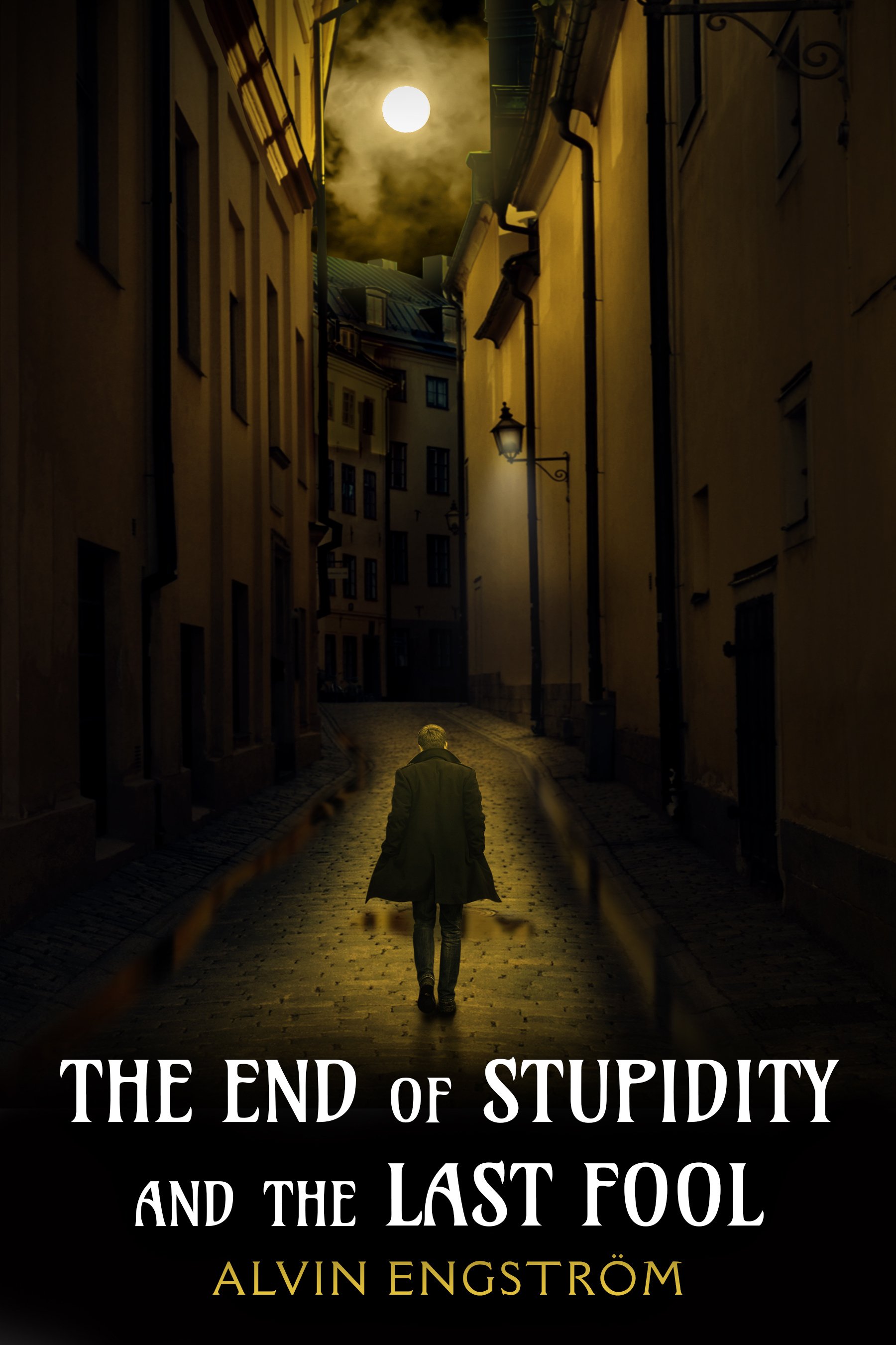
The End of Stupidity and the Last Fool
The End of Stupidity and the Last Fool
From a barricaded attic in Western Europe, Frederick watches a collapsing world through the narrow frame of his own convictions. A self-imposed exile and failed polemicist, he clings to a fading friendship while publishing scathing essays under a pseudonym, convinced that society’s greatest flaw is its inability to think clearly in the face of climate catastrophe. When a biotech company unveils Socrates II—a genetically engineered intellect designed to lead humanity—Frederick sees, at last, a path toward order.
As his writings gain traction and Socrates rises to power, Frederick is pulled from obscurity into influence. Yet beneath the promise of rational governance, something darker takes shape. Haunted by memory, drifting between imagined dialogues with philosophers and the fragile reality around him, Frederick becomes entangled in a system he helped legitimize. While the climate crisis intensifies and personal loss reshapes his perspective, he must confront the limits of intellect, the cost of detachment, and the danger of mistaking intelligence for wisdom.
Bleak, philosophical, and unsettlingly timely, this novel explores isolation, ideology, and the fragile boundary between reason and delusion in a world desperate for answers.
Discover the story and step into Frederick’s fractured world.
Excerpt from the book
Writing an autobiography is never easy, especially for someone who has lived such an uneventful life as I have. If you expect as much as a fairy tale or even a remotely interesting story, I encourage you to put down this book immediately before you have wasted enough time on it to sue its author (i.e. me). I can assure you that there is a clear correlation, not to say causation, between the consumption of this book and depression. And, yes, a further warning: I am not only a dull person but an equally dull writer. If you are looking for any sort of enjoyment, you will not find it here. However, if you – for whatever reason – are doing a study on the literary works that can be blamed for the current generation’s complete dissatisfaction with the written language, you have come to the right place.
I will now proceed with a bland description of the room where I lived for many years. The first phrase that comes to mind when describing my small chamber is “organised chaos”. It is one of those terms that all slightly messy people use to justify their mess, but in the case of the room on the attic floor, it was, for once, fitting. Even the casual observer would have noticed that there was indeed a system to the mess, although they would probably have struggled to explain how it worked, just like any person can recognise computer code without understanding it. But I was more than a casual observer of the chaos; I was its maker. Every distorted bookshelf was my creation, and every seemingly misplaced sheet of paper bore my signature.
One day, as I stood in the middle of the room thinking about my mess, I considered how the select few I had granted permission to see my home had always told me the same thing. All of them described it as a maze of confusion, which I never understood. Instead, I believed that the true confusion lay outside, in the too-perfectly paved boulevards and the carefully painted house façades. In many respects, the urban landscape – starting with the street outside the building – largely resembles the modern man. Only the maintenance of the façade really concerns us, and people care less about who they are and more about how they are perceived. This is, although most people fail to notice it, a very Hegelian worldview where thinking determines reality.
As a result, the vast majority of people live in a dreamland where positive thinking is the best medicine. Obviously, this outlook is unsustainable and bound to be overwhelmed by a Freudian unconscious washing over us with negative thoughts, creating a bipolar mindset where one individual can go from praising the flowers of some god’s creation to declaring the end of humanity in a matter of minutes. These bipolar individuals also happen to be the same people who, every four or five years, are forced to go to the voting booth and choose a ballot based on their daily mood. Might as well throw a coin. Heads you win, tails you lose. Needless to say, I was struck by the absurdity of people seeing this as the superior political system.



Sed purus sem, scelerisque ac rhoncus eget, porttitor nec odio. Lorem ipsum dolor sit amet.