



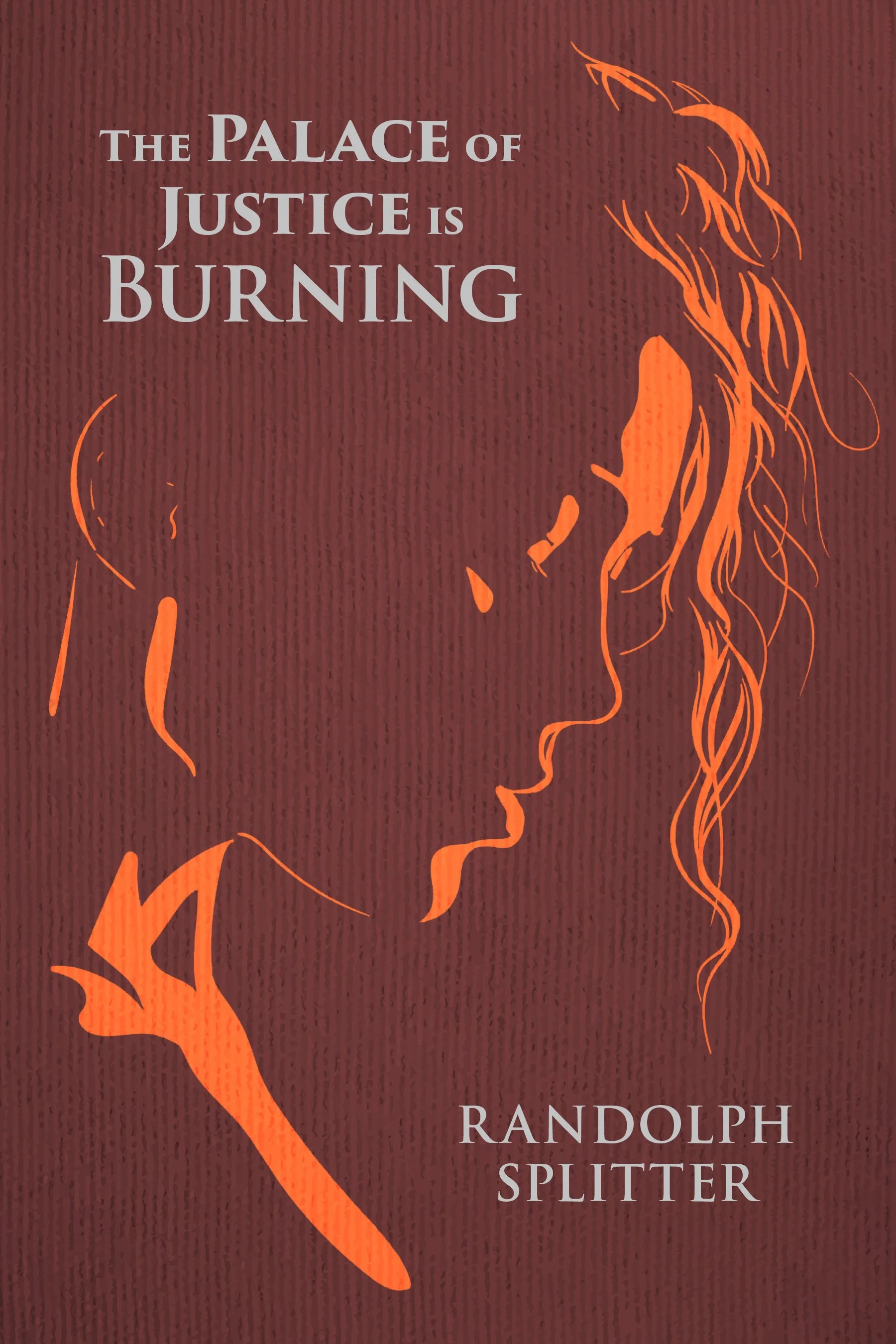
The Palace of Justice Is Burning
The Palace of Justice Is Burning
Before Rosa Apfelbaum found her voice, she had to fight for her life.
Married under false pretenses and virtually imprisoned in a brothel, Rosa—a young Jewish girl from Galicia—escapes and makes her way to Vienna. There, amid the hunger, loss, and uncertainty of World War I, she begins to rebuild her life and discover the power of writing.
As the old empire collapses and the progressive era of Red Vienna takes shape, Rosa becomes an advice columnist for a feminist weekly devoted to sexual freedom, women’s rights, and social reform. Drawn into the world of psychoanalysis through an idealistic young physician, she begins to explore the links between personal trauma, political change, and a woman’s right to tell her own story.
But Vienna’s promise is shadowed by rising violence. Editors are murdered, marchers are shot, and the courts fail to deliver justice. As fascist forces gather strength, Rosa must confront the wounds of her past while preparing her family for an uncertain future.
Rich in historical detail and emotional insight, The Palace of Justice Is Burning is a novel of survival, psychoanalysis, women’s liberation, and political upheaval in early twentieth-century Vienna.
Read The Palace of Justice Is Burning and discover a powerful historical novel where the personal and the political are inseparable.
Excerpt from the book
1911. I met Yankel for the first time at the crowded market where I had gone to purchase flour and sugar for my mother. When I spilled some, he helped me scoop fresh provisions into a sack. He had thick black hair under a well-worn cap, deep-set eyes, and strong arms, but he walked with a limp, a result (he said) of a childhood accident in which he had fallen out of a cart when it hit a deep rut in the road. His father had been driving. The combination of those deep brown eyes and the word “father” brought tears to my eyes. He seemed taken aback. When I recovered my composure, I explained that I had lost my own father a few years before.
“I understand,” he said. “My mother died when I was young, giving birth to my sister.”
When we had finished making our purchases, Yankel offered to help me carry my packages.
“That’s all right,” I said. “I’m a strong girl.”
“Even a strong girl can use some help sometimes.”
No, I can take care of myself, I thought, and, besides, he had to deal with his bad leg. But since he had a nice smile and seemed so friendly, I accepted his help. We walked through the noisy, crowded streets of the predominantly Jewish neighborhood of our small town, where pedestrians, horse-drawn carts, and a single modern motorcar jostled for space. Apprentices, clerks, and shop assistants in contemporary clothes hurried past pious, bearded men in long coats and large round hats, not to mention women in headscarves and long dresses shepherding their children to and fro.
Until my father’s death from tuberculosis, we had lived in a ramshackle three-room house—a shack really—with draft-prone windows and a leaky wooden roof. Tatte was a tailor, but since his father and grandfather had been sextons in the prayer house, he had grander ambitions for his children—my two younger brothers and me. He taught us to read, in Yiddish, before we realized that not everyone spoke our language or even used the same alphabet. We kept kosher and observed Shabbos, and my father went to the prayer house twice a week. Since girls couldn’t go to cheder, my parents sent me to the nearest public girls’ school. Along with Polish, Ruthenian, German, and Jewish girls, I learned arithmetic, reading, and writing, with a dash of history. At first, I hardly understood anything, since the classes were in Polish, but bit by bit, I picked up the language—as well as a smattering of Ruthenian and German—and soaked up the knowledge that was offered.
That all changed when Tatte died. I didn’t know he was going to die. He had a chronic cough, and then, toward the end, he started to feel tired. But neither Tatte nor Mamme said anything about dying. One day he said he was too tired to go to work. He took to his bed and never got up again. If I was shocked, my little brothers were bewildered. They howled and wailed and clung to Mamme’s skirts, and when Mamme shooed them away, they forgot about Tatte and played games in the alley next to our house.

Sed purus sem, scelerisque ac rhoncus eget, porttitor nec odio. Lorem ipsum dolor sit amet.